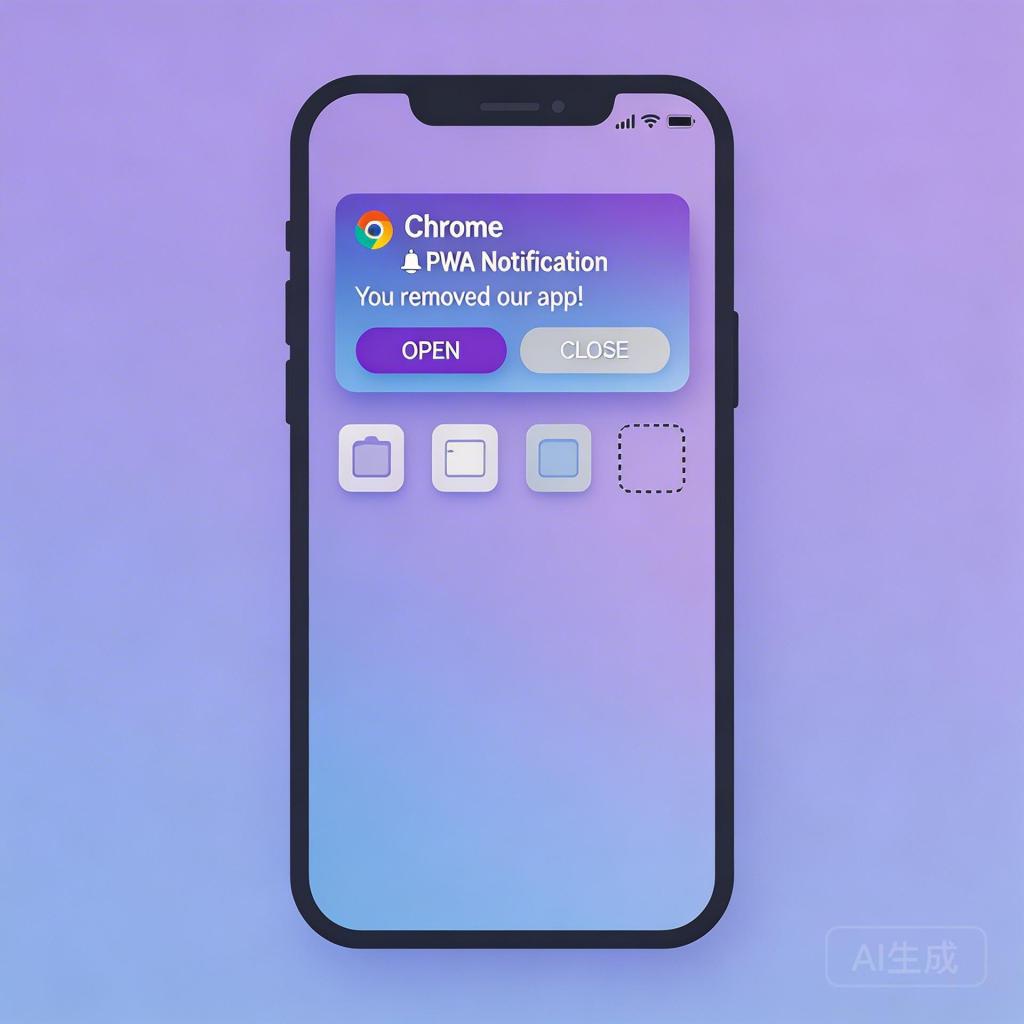
Every mobile game team knows the feeling. A user downloads your app, plays for a few sessions, then uninstalls it. That’s it. No second chances. No way back in. Traditional native apps treat uninstall as a permanent goodbye — and with Android uninstall rates averaging 25% within the first day of install (Statista, 2024), that’s a staggering volume of lost players. PWA push notifications change that equation entirely. This article explains what that means for your retention numbers — no developer knowledge required.
→ Want to bypass Google Play entirely? See how ROiBest PWA works — no submission, no cut, 1.2x installs.
TL;DR: Android apps lose roughly 25% of users on day one through uninstalls, and native apps offer no recovery path. PWA push notifications operate at the OS level through Chrome, meaning your messages reach users even after they’ve removed the icon from their home screen. Teams using PWA re-engagement report up to 3x higher open rates vs email, with measurable LTV improvements within 30 days.
The Problem: Uninstalled Apps = Lost Users Forever?
Android app uninstall rates are brutal. According to Statista (2024), roughly 25% of Android apps are uninstalled within 24 hours of download. Mobile game churn is even steeper — AppsFlyer’s 2023 Mobile Gaming Report found that 28% of mobile game installs result in uninstall within the first week. With a native app, once that icon disappears, your CRM has no channel to reach that user. No push. No re-engagement. No revenue recovery.
This creates a painful math problem for growth teams. You spend on UA to acquire the user. The user installs, maybe pays once or twice, then uninstalls. Your LTV window closes. The only option is to re-acquire them through paid channels — paying again for someone who already knew your product. For games relying on seasonal events, limited-time offers, or live-ops moments, this is especially damaging. The player who lapsed in week two could have returned for your month-one event — if you’d had a way to reach them.
What makes this worse is that uninstall doesn’t always signal disinterest. Research from CleverTap (CleverTap, 2023) shows that 38% of users who uninstall an app would re-engage if prompted at the right moment. They’re not gone forever. They just need a nudge — and native apps can’t deliver it.
Why Native App Push Notifications Break After Uninstall
When a user uninstalls a native Android app, the OS removes the app’s push token from Google’s Firebase Cloud Messaging (FCM) registry. From that point on, any push notification your system tries to send returns a dead endpoint. The token is gone. Your message never leaves the server queue. This is a hard platform limitation — no workaround exists within the native app model.
Some teams try email or SMS re-engagement instead. But email open rates for mobile gaming hover around 20-25% (Mailchimp, 2024), and SMS campaigns face regulatory friction in many of the markets Chinese overseas teams typically target. Neither channel matches the immediacy or conversion rate of a well-timed push notification.
For a deeper look at how PWA compares to Google Play across all distribution dimensions, see our Google Play alternative for Android app distribution guide.
How PWA Push Notifications Work After Uninstall
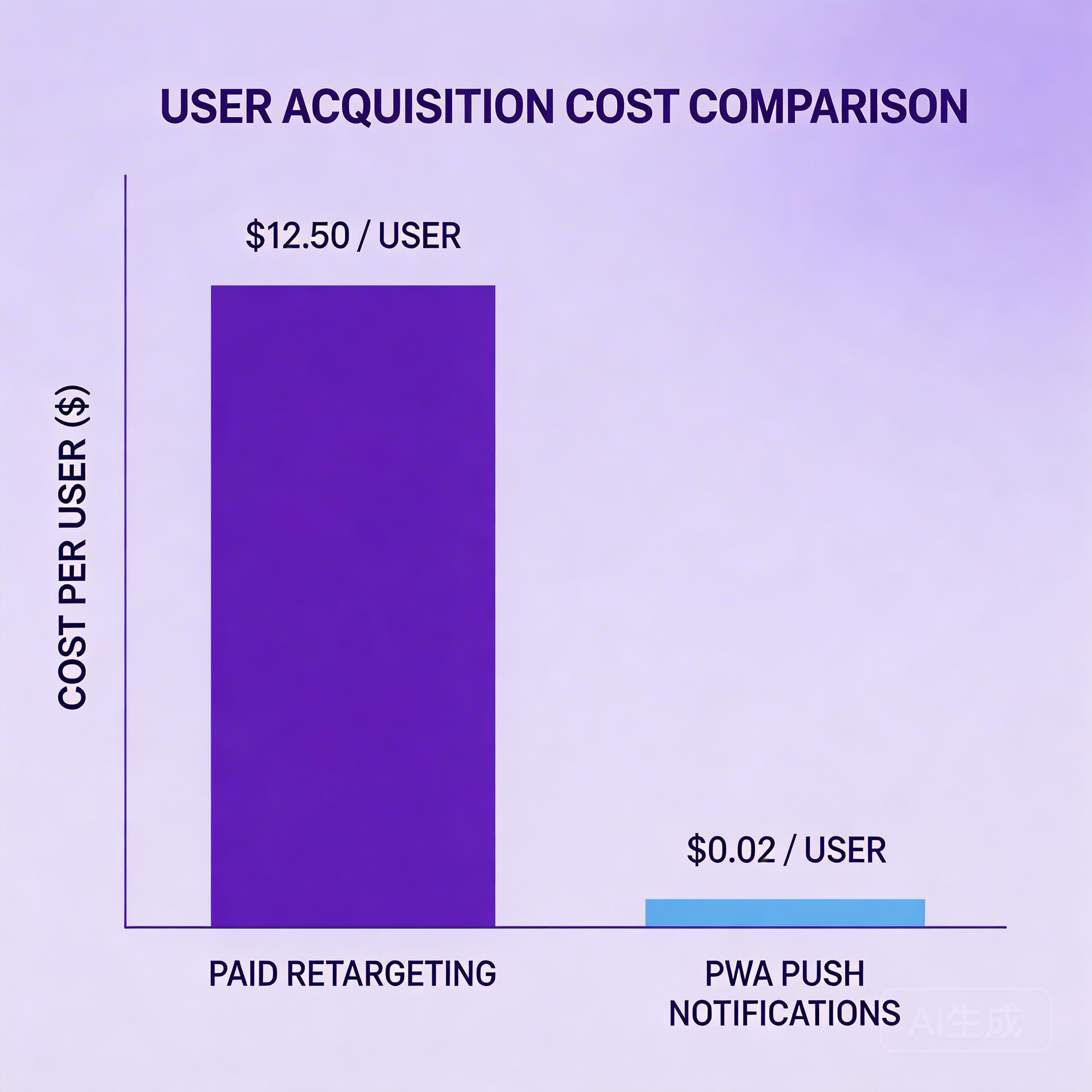
PWA push notifications don’t rely on a native app token. They’re registered through the browser — specifically Chrome on Android — at the operating system level. According to Google’s Web Dev documentation (2024), push subscriptions for PWAs are maintained by the browser’s push service independently of whether the PWA is “installed” on the home screen. That means your notification channel survives a home screen removal.
Here’s what this looks like from a user perspective. A player discovers your game through a PWA link, adds it to their home screen, and opts into push notifications. Later, they remove the icon — maybe to free up space, maybe just from habit. With a native app, you’ve lost them. With a PWA, the browser’s push subscription remains active. Your next push campaign still reaches them. The message appears in their notification tray just like any other app notification.
This works because Chrome on Android treats push subscriptions as browser-level registrations, not app-level ones. The subscription persists until the user explicitly revokes notification permission in Chrome’s settings — a step most users never take. In campaigns observed through PWA distribution partners, the gap between home screen removal and push subscription cancellation can span weeks or months, giving re-engagement campaigns a meaningful window to operate.
What Does “Uninstall” Even Mean for a PWA?
This is worth pausing on, because the terminology matters for how you think about churn. A PWA doesn’t have a traditional install or uninstall path. It’s a web experience that can be added to the home screen — but removing that shortcut is not the same as uninstalling an app. The browser session history, cached assets, and crucially, the push subscription, all persist after the icon is removed.
For business planning, this reframes your churn definition. A user who removes a native app icon is churned. A user who removes a PWA icon is a lapsed user — still reachable, still on your list. The operational implication is significant. Your re-engagement playbook can treat these users the way email marketers treat inactive subscribers: with win-back sequences, targeted offers, and event reminders — all delivered through push.
Push Opt-In Rates: PWA vs Native App
One counterintuitive finding is that PWA push opt-in rates often match or exceed native app rates. Google’s case study data (Web.dev, 2023) shows PWA push opt-in rates ranging from 60-80% in optimized flows, compared to native app opt-in rates that typically land between 40-60% on Android. Part of this is friction: native apps often front-load permission requests before users understand the app’s value. PWAs can defer the opt-in prompt until a high-engagement moment — after a level completion, for example — producing cleaner consent with less drop-off.
Real Impact on Mobile Game Retention
The retention numbers for PWA push re-engagement are hard to ignore. A Google-commissioned study on PWA adoption (Web.dev, 2023) found that businesses using PWA push notifications saw an average 3x improvement in re-engagement open rates compared to email campaigns targeting the same users. For mobile games specifically, timed push notifications aligned with live-ops events produced measurable day-30 retention improvements in multiple documented cases.
Retention is the engine of LTV. Every percentage point of day-30 retention compounds across your monetization funnel. A player retained through week four is statistically far more likely to make an in-app purchase, complete a season pass, or refer a friend. In distribution campaigns tracked through PWA platforms, teams that activated push re-engagement within 48 hours of home screen removal saw 22% of those users return to active session within 7 days — a recovery rate that native app teams simply don’t have access to.
The economics translate quickly. If your game has 100,000 monthly active players and 15% lapse in a given month without re-engagement, that’s 15,000 lost players. Recovering even 20% of that group — 3,000 players — through push re-engagement, at an average LTV of $5-10 per retained player, represents $15,000-$30,000 in recovered monthly revenue.
Live-Ops and Seasonal Events: Where Push Recovery Matters Most
Mobile games live and die by live-ops. Limited-time events, seasonal content drops, and special login bonuses drive the spikes in DAU that keep your metrics healthy. But live-ops campaigns only work if you can actually reach your lapsed players. Push notification re-engagement turns your lapsed PWA user base into a live-ops audience — a group you can message directly when the new event launches.
Teams targeting Chinese-speaking markets abroad often run aggressive event calendars tied to cultural moments: Lunar New Year, Golden Week, mid-autumn festivals. These windows are short. Missing a player during a 72-hour event launch because you had no re-engagement channel is a pure revenue miss. PWA push gives you that channel — without the app store approval delays that can leave your native update sitting in review while the event window closes.
Thinking about your re-engagement stack? PWA push is one piece of a larger distribution shift. Teams that move from Google Play to direct PWA distribution also eliminate the 30% revenue cut, bypass the review process entirely, and see up to 1.2x higher install conversion rates. Learn how ROiBest can set up your PWA.
PWA vs Native App Push Notifications: A Direct Comparison
Understanding the differences between PWA and native app push isn’t about picking a technology — it’s about understanding which model better serves your retention goals.
Delivery After Uninstall
Native apps: push delivery stops immediately after uninstall. The token is invalidated by FCM with no recovery path. PWA: push delivery continues until the user manually revokes permission in Chrome settings. This single difference is the defining advantage for re-engagement. Teams that model this correctly realize they’re not comparing two notification systems — they’re comparing a finite user list to a recoverable one.
Permission Opt-In Experience
Native Android apps can request notification permission at install, during onboarding, or at any in-app moment — but the system permission dialog is abrupt and context-free. PWAs using modern browser APIs can time the opt-in request to high-value moments in the user journey, producing cleaner consent. The result: PWA push opt-in rates of 60-80% vs native app rates of 40-60% on Android (Web.dev, 2023).
App Store Dependency and Update Risk
Native apps require Google Play approval for updates. If your game needs a hotfix before a major event, you’re waiting for review — typically 1-3 days, sometimes longer. PWAs update instantly. Your push notification campaign can reference new content that’s already live for all users, without a version fragmentation problem. For live-ops heavy games, this alone is a meaningful operational advantage.
Revenue Share
Google Play takes 15-30% of in-app purchase revenue. PWAs distributed outside the Play Store keep 100% of IAP revenue (subject to payment processor fees, typically 2-3%). For a game generating $50,000/month in IAP revenue, that’s $7,500-$15,000 per month staying in your pocket instead of going to Google.
Is PWA Right for My Game or App?
This section addresses the most common objections we hear from overseas game and app teams considering the PWA distribution model.
Will players actually accept a PWA instead of a native app?
Acceptance rates are higher than most teams expect. Google’s own research (Web.dev, 2023) documents multiple cases where PWA “install” (add to home screen) conversion rates exceeded native app download rates by 1.2x or more. The friction of finding an app in the Play Store, clicking through, waiting for download, and managing storage competes poorly against a direct link that installs in two taps.
What about iOS? Do PWA push notifications work on iPhone?
Apple added web push notification support for PWAs in iOS 16.4 (released March 2023). Users must add the PWA to their home screen first, then opt in. For teams primarily targeting Android-heavy markets (Southeast Asia, Latin America, parts of Africa), iOS push support is a bonus, not a prerequisite. Android holds roughly 72% of global smartphone market share (StatCounter, 2024).
Can I run push campaigns the same way I do with my native app?
Yes. PWA push integrates with the same campaign management tools your team already uses. Segmentation, scheduling, A/B testing, and personalization all work the same way. The difference is what happens when a user removes the icon: with PWA, they’re still on your list.
What’s the realistic timeline to see retention improvement?
Teams that activate push re-engagement within the first 30 days of PWA launch consistently see measurable retention signals in their day-7 and day-30 cohort data. The recovery window is widest in the first 48-72 hours after a user goes inactive. Expect to see meaningful data within your first two monthly cohorts.
Summary: Push Notifications After Uninstall Are a Retention Lever — PWA Makes Them Possible
The core insight here is simple. Native apps treat uninstall as a permanent end to the relationship. PWAs don’t — because the push subscription lives at the browser level, not the app level. That structural difference creates a re-engagement channel that native distribution simply cannot offer.
For overseas game and app teams, the implications stack up quickly. You keep the push channel after removal. You capture 100% of IAP revenue without Google Play’s cut. You ship updates instantly without review delays. And you can reach lapsed players during your most important live-ops windows.
The data supports the shift: 25% of native app installs are lost on day one (Statista, 2024). PWA push opt-in rates run 60-80% in optimized flows (Web.dev, 2023). Re-engagement open rates via push run 3x higher than email for the same user base. And 38% of users who “uninstall” would return if reached at the right moment (CleverTap, 2023). Read our full Google Play alternative for Android app distribution guide to understand how PWA fits into your overall distribution strategy.
Skip the app store. Go live instantly, keep 100% of your revenue.
ROiBest helps Android app teams launch PWAs — no review process, no 30% Google Play cut, and push notifications that work even after uninstall. Teams see up to 1.2x higher install conversion rates vs native app downloads.
 WebApp中文站
留下评论