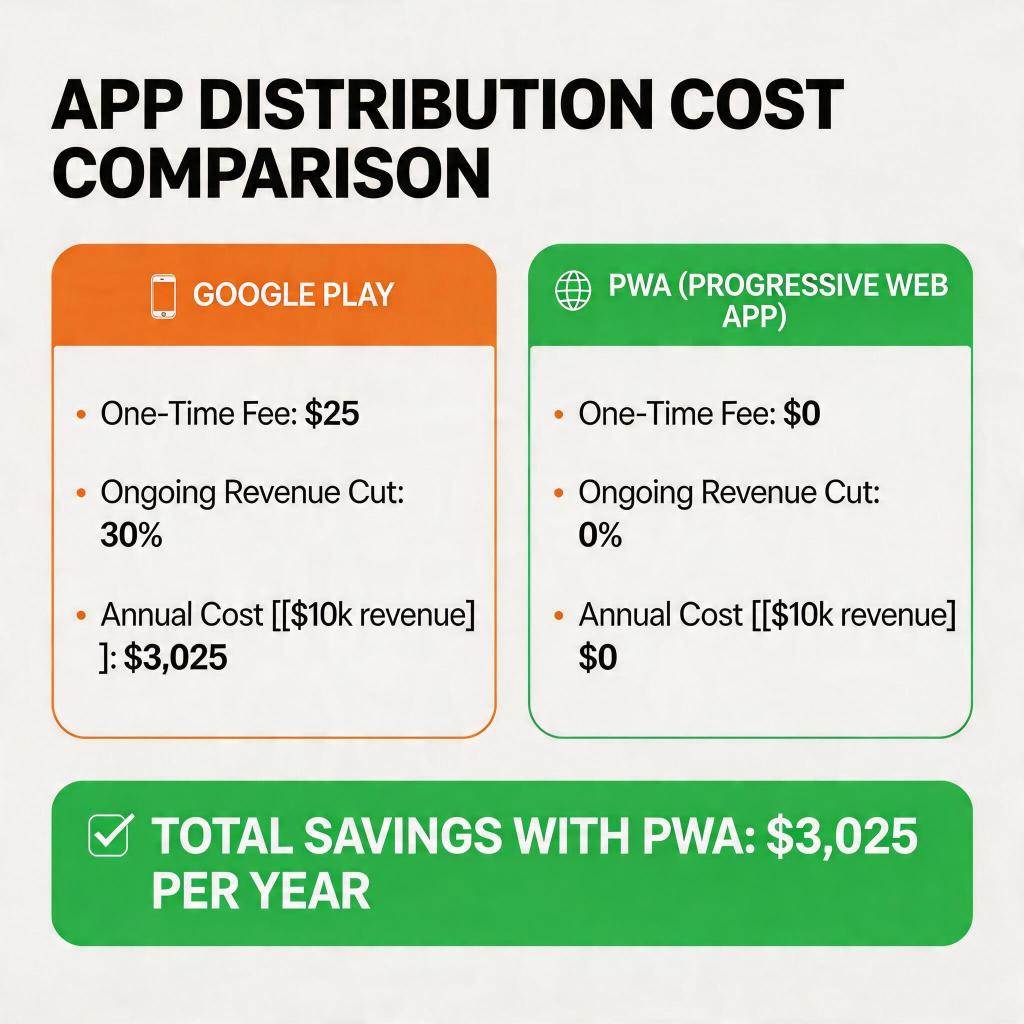
Meta’s advertising platform has long been the backbone of app acquisition campaigns for game studios and consumer app teams operating internationally. But 2026 is delivering a quiet shock to media plans that were already stretched thin: a multi-country digital service tax (DST) surcharge now applies to Meta’s ad invoicing — and for teams running significant spend across Europe, Southeast Asia, and Latin America, that 3% hit is compounding on margins that were already compressing.
→ Want to bypass Google Play entirely and reduce your reliance on Meta ads? See how ROiBest PWA works — no submission, no cut, 1.2x installs.
For出海团队 where 60–80% of user acquisition spend flows through Meta, even a single percentage point of margin erosion matters. The DST surcharge doesn’t just raise costs — it reshuffles the economics of every distribution channel you rely on. And that recalculation points more directly than ever to PWA as a strategic offset.
What the Meta DST Surcharge Actually Means for Your Campaign
Digital service taxes have been on the books in various forms since France introduced the first major DST legislation in 2019. But 2026 marks the year where the administrative rollout reached a critical mass of markets — and Meta’s billing infrastructure began applying surcharges automatically to affected accounts.
The markets driving the most impact for app campaigns include:
- European Union — DST frameworks active in France, Italy, Spain, Austria, and the UK (post-Brexit but mirroring EU intent), with rates ranging from 1.5% to 3% on digital advertising revenues attributable to local users
- Southeast Asia — Indonesia, Thailand, and Vietnam have all enacted DST legislation effective in 2025–2026, with Meta beginning to pass through levies on invoices for campaigns targeting users in those markets
- Latin America — Argentina and Chile have frameworks that apply to advertising platform revenues, with Brazil’s framework creating the largest exposure given its market size for mobile gaming
The surcharge is calculated on the advertising revenue attributable to users in the taxing jurisdiction. For app teams running broad demographic targeting, this effectively means a blended effective surcharge rate across your campaign spend — and for teams spending $50,000/month on Meta, a 2–3% DST hit translates to $12,000–$18,000 in additional annual costs with zero incremental return.
The critical point for distribution planning: this surcharge is applied on the advertising cost side, not on revenue from app distribution. That asymmetry is where PWA distribution starts to look not just interesting, but economically urgent.
The Cost Stack Nobody Budgeted For: Three Channels Compared
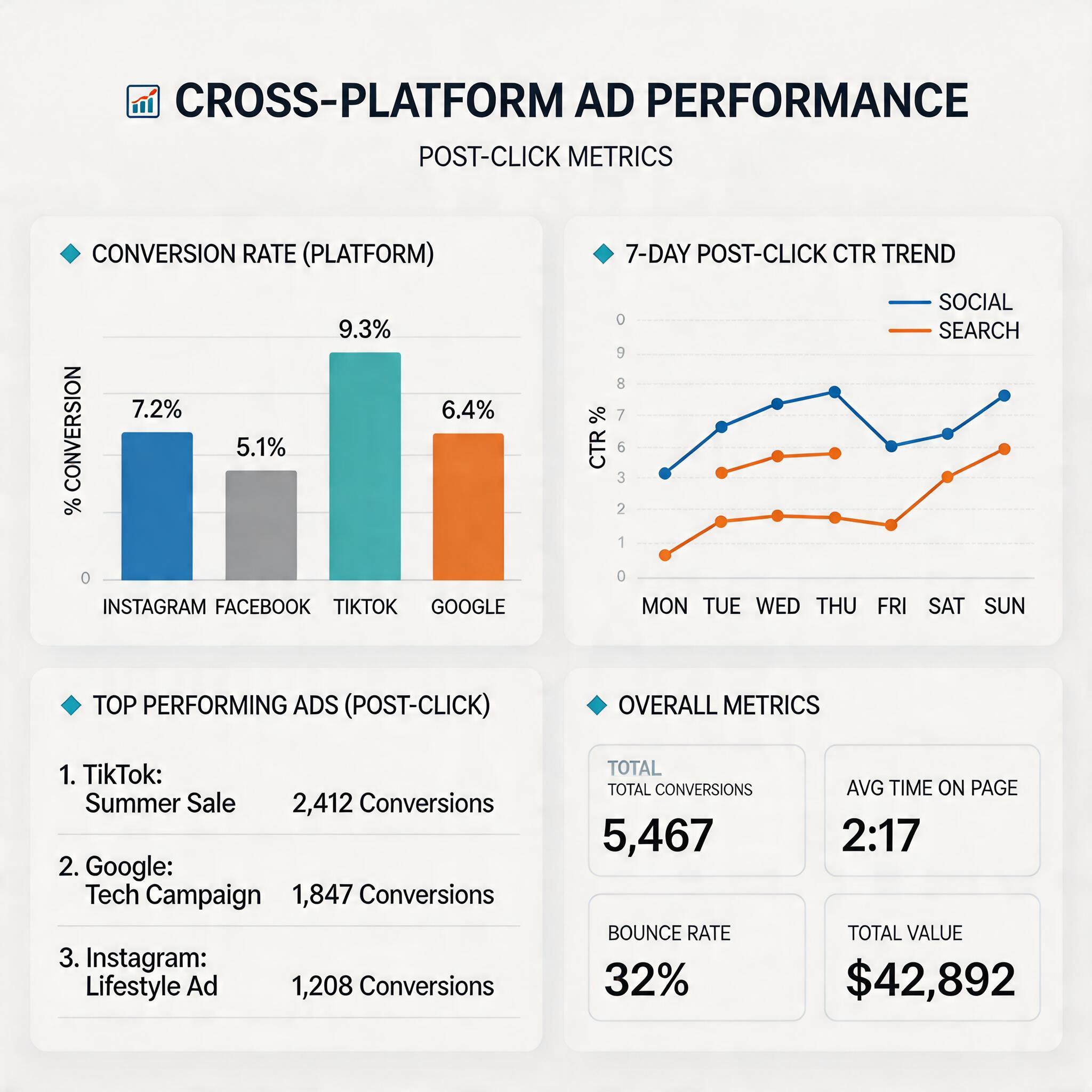
To understand where PWA fits in the new landscape, you need to see the full cost stack side by side. Below is a simplified comparison of three distribution approaches for a mid-size mobile game launching in two European markets plus Indonesia — a realistic scenario for many Chinese teams targeting casual gaming audiences abroad.

Scenario: Casual Mobile Game, €30,000 Monthly Ad Spend
Channel A — Meta Ads Only (Current Baseline)
- Monthly ad spend: €30,000
- Meta platform fee: ~€1,800 (6%, before DST)
- DST surcharge (EU + Indonesia blend ~2.5%): €750
- Effective cost increase from 2025 baseline: ~€750/month, ~€9,000/year
- Install conversion rate (PWA-capable traffic → install): ~35%
- Post-install retention (no direct app store presence): moderate
Channel B — Google Play Distribution + Meta Retargeting
- Google Play app store fee (first $1M revenue): 15%
- Google Play app store fee (after $1M): 30%
- Payment processor cut: included in Google’s take
- Meta retargeting spend to drive Play installs: €10,000/month
- DST surcharge on retargeting: €250/month
- Installation from Play Store: estimated 40% of total installs
- Users acquired through Play: subject to Play’s ongoing terms
Channel C — PWA Distribution via ROiBest + Reduced Meta Spend
- PWA distribution setup (one-time): covered by ROiBest service
- Ongoing PWA hosting and packaging: included in ROiBest model
- Google Pay revenue share: 0% — PWA transactions flow through your own payment stack
- Meta spend (reduced from €30K to €15K for top-of-funnel only): €15,000/month
- DST surcharge on reduced Meta spend: €375/month (vs €750 baseline)
- Install conversion rate (PWA direct install): 1.2x vs Play store — users install directly from web, no app store friction
- Push notification reach: available even post-uninstall via Chrome-based stack
The comparison is stark. By shifting part of your acquisition budget from Meta’s ad ecosystem to a PWA distribution channel managed through ROiBest, you simultaneously reduce your DST exposure (smaller Meta bill = smaller surcharge), eliminate Google’s revenue cut on in-app purchases, and gain a direct install path with measurably better conversion.
Why PWA Is Now a Financial Hedge, Not Just a Technical Alternative
The conversation about PWA as a Google Play alternative has historically centered on review risk and speed to market. Apps get rejected. Updates get delayed. Content policies get enforced in ways that feel arbitrary to international teams. PWA sidesteps all of that — and for teams in categories with elevated review risk (gaming, fintech-adjacent apps, AI social apps), that alone justified the switch.
2026 adds a second compelling column: financial resilience.
When regulatory costs like DST surcharges are applied asymmetrically — hitting your paid acquisition channel but not your organic or PWA-based distribution — the smart strategic response is to deliberately shift the mix. PWA distribution doesn’t just avoid the DST; it also avoids the platform fees, the review risk, and the dependency on a single traffic channel whose costs are increasingly subject to regulatory markup.
For ops teams that have been running Meta-dominant acquisition for years, this is not a comfortable shift. Meta’s targeting, measurement, and optimization tools are genuinely excellent. You shouldn’t abandon them. But the optimal structure in 2026 is increasingly: use Meta for top-of-funnel awareness and targeting precision, but route as many of your conversions and revenue-generating installs as possible through PWA — where the cost structure is cleaner and the unit economics improve with every dollar of DST surcharge that hits your competitors who haven’t diversified.
Which Teams Should Act Now — and Which Can Wait
Not every team needs to restructure their distribution mix immediately. Here’s a practical framework:
Act now if:
- Your Meta monthly spend exceeds €20,000 and you operate in EU, SEA, or LATAM markets
- Your app category faces elevated Google Play review risk (BC gaming, AI social, dating-adjacent)
- Your revenue model relies heavily on in-app purchases where Google’s 30% cut meaningfully impacts unit economics
- You’ve already seen a direct line item for “digital service tax” or “regulatory surcharge” on a Meta invoice
Monitor if:
- Your primary markets are the US, Japan, and South Korea — where DST frameworks are either absent or not yet applied to Meta’s billing
- Your app’s core distribution comes through OEM partnerships or pre-load deals rather than app store or paid media
- Your revenue model is ad-supported rather than IAP-heavy, meaning Google’s cut doesn’t directly erode your margins
Even for teams in the “monitor” category, the directional trend is clear: more countries are enacting DST frameworks each year, and Meta’s history suggests it will pass these costs through to advertisers rather than absorbing them. Building PWA distribution capability now is cheap insurance against a future where the surcharge applies to 100% of your markets.
Operational Reality: How to Execute the Shift Without Disrupting Current Performance
The most common objection from ops teams is: “We can’t just turn off Meta — it’s driving our installs.” That’s correct, and it’s not what we’re recommending. The execution model is a gradual channel reweighting:
Step 1: Stand up PWA distribution alongside existing channels. ROiBest handles the technical packaging, app store compliance equivalent (manifest, service worker, install UX), and hosting. This takes days, not weeks. You now have a second distribution path that’s running parallel to your Meta funnel.
Step 2: Tag and track PWA installs separately in your attribution stack. Use your existing MMP (Mobile Measurement Partner) to assign distinct campaign or channel tags to PWA-originated installs. This is critical: you cannot optimize a channel you cannot measure, and the PWA install path needs to be visible in your data before you can confidently shift budget.
Step 3: Gradually reduce Meta retargeting spend as PWA audience grows. As your PWA user base expands, the opportunity to engage those users through ROiBest’s push notification infrastructure reduces the dependency on Meta retargeting campaigns — which are among the most expensive line items in your media plan and the most exposed to DST surcharges.
Step 4: Run a 30-day cost-per-install (CPI) comparison across channels. With proper tracking in place, compare your Meta CPI, Google Play CPI, and PWA install cost. For most teams running this analysis in 2026, the PWA number comes in 20–35% lower once Google Play fees and Meta DST exposure are factored in on the other channels.
The Bottom Line: DST Surcharge Changes the Math, PWA Changes the Strategy
The Meta DST surcharge is not a temporary market fluctuation — it’s a structural addition to your cost of customer acquisition that reflects a long-term regulatory trend. Teams that continue to concentrate 70–80% of their acquisition budget in a single platform, in a regulatory environment that’s increasingly taxing that platform’s services, are building on expensive ground.
PWA distribution through ROiBest doesn’t just offer an alternative — it offers a structurally cleaner cost basis in markets where regulatory costs on digital advertising are only going to increase. The teams that reweight their distribution mix in 2026 will have a compounding advantage over those who wait for the surcharge environment to “settle.” It won’t settle. Plan accordingly.
Skip the app store. Go live instantly, keep 100% of your revenue.
ROiBest helps Android app teams launch PWAs — no review process, no 30% Google Play cut, and push notifications that work even after uninstall. Teams see up to 1.2x higher install conversion rates vs native app downloads.
 WebApp中文站
留下评论