In April 2026, three major shifts are converging on Android app distribution for global teams: TikTok and Canva have launched a full-funnel creative workflow that compresses ad production from days to hours, Meta’s DST and Location Fee has taken effect across six European markets pushing ad costs up 2–5%, and AI content labeling compliance has become a non-negotiable requirement for ad creatives. For gaming and AI social app teams targeting global users, the question is no longer “should we be on Google Play?” but “how do we distribute efficiently while controlling cost and compliance risk?”
→ Want to bypass Google Play entirely? See how ROiBest PWA works — no submission, no cut, 1.2x installs.
TikTok/Canva Full-Funnel Creative Workflow and App Distribution
The TikTok-Canva integration allows advertisers to design creatives inside Canva using TikTok-native templates, performance insights, and ad specs — then push directly to TikTok Ads Manager. For global app teams, this collapses the creative production cycle from days to hours.
But faster creative production exposes a bottleneck on the distribution side. If your app still depends on Google Play, users click the ad, land on your store page, and face review delays, regional restrictions, or large APK downloads. The creative momentum dies at the install step. PWA distribution closes this gap: users click the ad, land on a self-hosted install page, and add the app to their home screen in seconds — no store redirect, no wait.
More importantly, the creative formats native to the TikTok/Canva workflow — vertical video, interactive cards, instant-install buttons — map naturally to PWA landing pages. Google Play’s store page templates offer far less flexibility for these rich formats.
Meta DST/Location Fee: Europe Cost Impact Analysis
Starting April 2026, Meta is charging DST (Digital Services Tax) and Location Fee across the UK, France, Germany, Italy, Spain, and Turkey. Advertisers in these markets see cost increases of 2–5% on Meta ad spend. For gaming and AI app teams with European user acquisition budgets, this means fewer installs for the same spend.
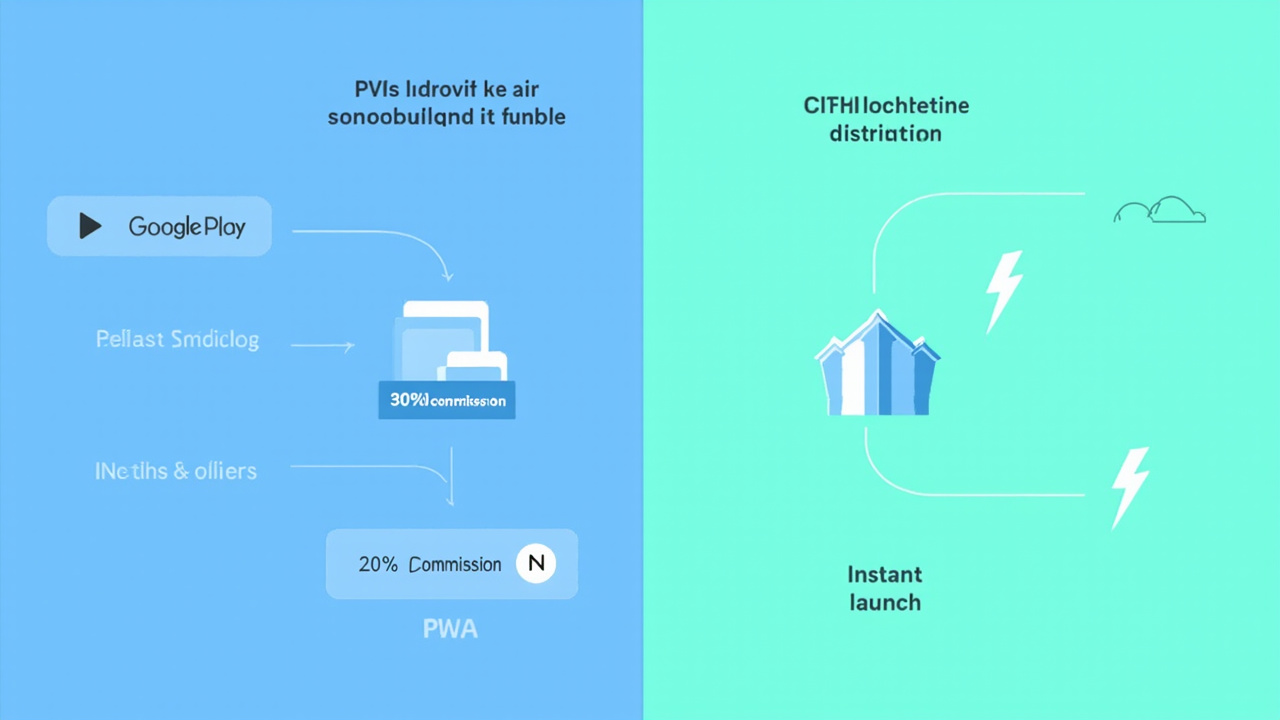
Under cost pressure, every efficiency gain matters. Google Play’s 30% commission on in-app purchases, stacked on top of Meta’s 2–5% surcharge, significantly erodes unit economics. PWAs bypass the Google Play commission entirely — teams keep 100% of in-app revenue. In practical terms, this 30% cost buffer partially offsets the DST impact.
Additionally, PWA install conversion rates run 1.2x higher than native app downloads (ROiBest client data). More installs per dollar of ad spend further dilutes the DST cost increase. For teams where Europe is a primary market, PWA is not an “alternative” — it is a cost-hedging instrument.
AI Content Labeling Compliance for Advertisers
In 2026, Google and Meta have tightened AI-generated content labeling requirements. The EU AI Act, FTC guidance, and platform policies all mandate clear disclosure when AI is used to create ad creatives. Violations trigger ad rejection, account restrictions, and reputational damage.
For global teams, compliance is not as simple as adding a small label. The TikTok/Canva workflow relies heavily on AI-assisted creative generation. If creatives reach the ad platform without proper labeling review, campaign launches get delayed and budgets sit idle.
PWA distribution offers a structural advantage here: PWA landing pages are fully controlled by the team. Disclosure placement, privacy policy links, terms of service, and AI-generated content notices can be positioned exactly where needed — without fighting store page templates or additional store-level review requirements.
PWA as Google Play Alternative — The Complete Business Case
Combining the three signals above, the Q2 2026 distribution landscape for Android apps is clear:
- Creative velocity: TikTok/Canva workflows accelerate production, but distribution must keep pace
- Cost pressure: Meta DST + Google Play commission compress margins from both sides
- Compliance complexity: AI labeling requirements demand flexible, self-controlled landing pages
PWA addresses all three dimensions:
| Dimension | PWA | Google Play |
|---|---|---|
| Time to market | Instant, no review | Days to weeks, delisting risk |
| Revenue retention | 100%, zero commission | 30% Google Pay cut |
| Install conversion | 1.2x vs native download | Variable by APK size and network |
| User re-engagement | Push works after uninstall | No reach after uninstall |
| Compliance flexibility | Fully controlled landing page | Store template and review constraints |
For gaming teams, PWA means bypassing commission, faster launches, and complete retention tooling. For AI social apps, PWA means avoiding review risk and maintaining creative freedom.
How ROiBest Enables Instant PWA Distribution
ROiBest is a PWA launch service built specifically for global app teams. We do not teach you to code, configure manifests, or register service workers. We solve one problem: getting your app to users as a PWA in the shortest possible time.
What ROiBest delivers:
- No review gates: Bypass Google Play review, launch immediately, zero delisting risk
- Full revenue retention: No 30% Google Pay commission, all in-app revenue stays with your team
- Post-uninstall push: Chrome-based push notifications re-engage users even after uninstall
- Higher install conversion: PWA installs happen instantly, delivering up to 1.2x conversion vs native downloads
Whether you are a gaming team testing new markets or an AI social app team managing review risk, ROiBest can launch your PWA within 48 hours.
Skip the app store. Go live instantly, keep 100% of your revenue.
ROiBest helps Android app teams launch PWAs — no review process, no 30% Google Play cut, and push notifications that work even after uninstall. Teams see up to 1.2x higher install conversion rates vs native app downloads.
 WebApp中文站
留下评论