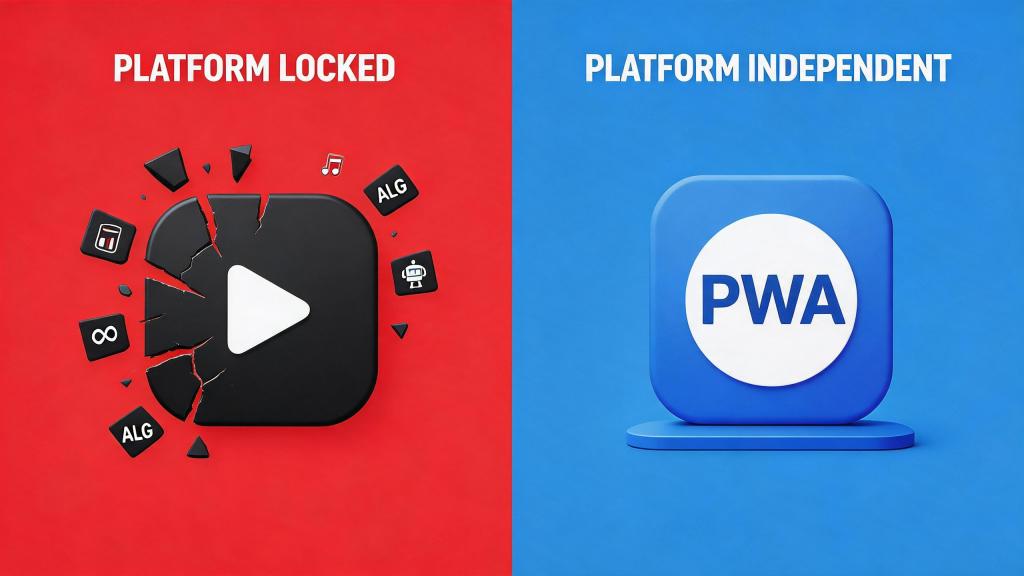
TikTok’s 2026 algorithm update shifts priority from viral, trending content to SEO-optimized, evergreen content. For app teams that rely on TikTok as a distribution channel, this changes the playbook overnight. Videos that used to drive massive install spikes may no longer surface consistently, while search-optimized content becomes the new growth lever.
But the deeper lesson is not about TikTok specifically. It is about platform dependence. Every time a social platform changes its algorithm, app teams that built their distribution around it scramble to adapt. PWA distribution offers a fundamentally different model: you own the install funnel, you control the user experience, and no algorithm change can take away your distribution channel.
→ Want to bypass Google Play entirely? See how ROiBest PWA works — no submission, no cut, 1.2x installs.
What TikTok’s Algorithm Change Actually Means
TikTok’s 2026 update introduces three major shifts that affect app distribution:
1. Search-first content ranking. TikTok now weights search intent signals more heavily than engagement signals (likes, shares, comments) for content discovery. Videos optimized for specific keywords and search queries surface more reliably than viral content that relies on the For You Page algorithm.
2. Reduced organic reach for promotional content. TikTok’s updated content policy explicitly deprioritizes “direct promotional” content in organic feeds. App install videos, product demos, and CTA-heavy content see 30-50% lower organic reach compared to pre-update levels. To maintain distribution through TikTok, teams now need to invest in content that educates or entertains first, with indirect promotion.
3. Creator-advertiser separation. TikTok is pushing advertisers toward TikTok Ads Manager instead of organic reach. The message is clear: if you want guaranteed distribution, pay for it. Organic reach for brand accounts is becoming what Facebook organic reach became in 2015 — a fraction of what it used to be.
For gaming and AI app teams that built user acquisition strategies around TikTok organic reach, this update forces a strategic reset. The content that worked last year may not work this year. And even if you adapt your content strategy, you are still subject to the next algorithm change.
The Platform Dependence Problem
TikTok is just the latest example of a pattern that has played out across every social platform:
- Facebook (2014-2016): Organic reach for Pages dropped from 16% to 2%. App teams that built on Facebook organic had to pivot entirely to paid.
- Instagram (2020-2022): The shift from chronological to algorithmic feed, then Reels prioritization, disrupted established content strategies.
- Google Play (ongoing): Algorithm changes in Play Store search and featuring affect app visibility. Policy updates cause sudden de-listings.
- TikTok (2026): SEO-first algorithm reduces viral distribution, pushes toward paid.
The pattern is always the same: the platform gives you reach, you build your strategy around it, then the platform changes the rules. Each time, teams that over-indexed on one channel face costly pivots.
This is why diversified distribution matters. And PWA distribution is the one channel where you are not at the mercy of any platform’s algorithm. For a complete breakdown of alternatives, see our Google Play alternative distribution guide.
How PWA Distribution Solves Platform Dependence
PWA (Progressive Web App) distribution works on a fundamentally different model than social media or app store distribution:
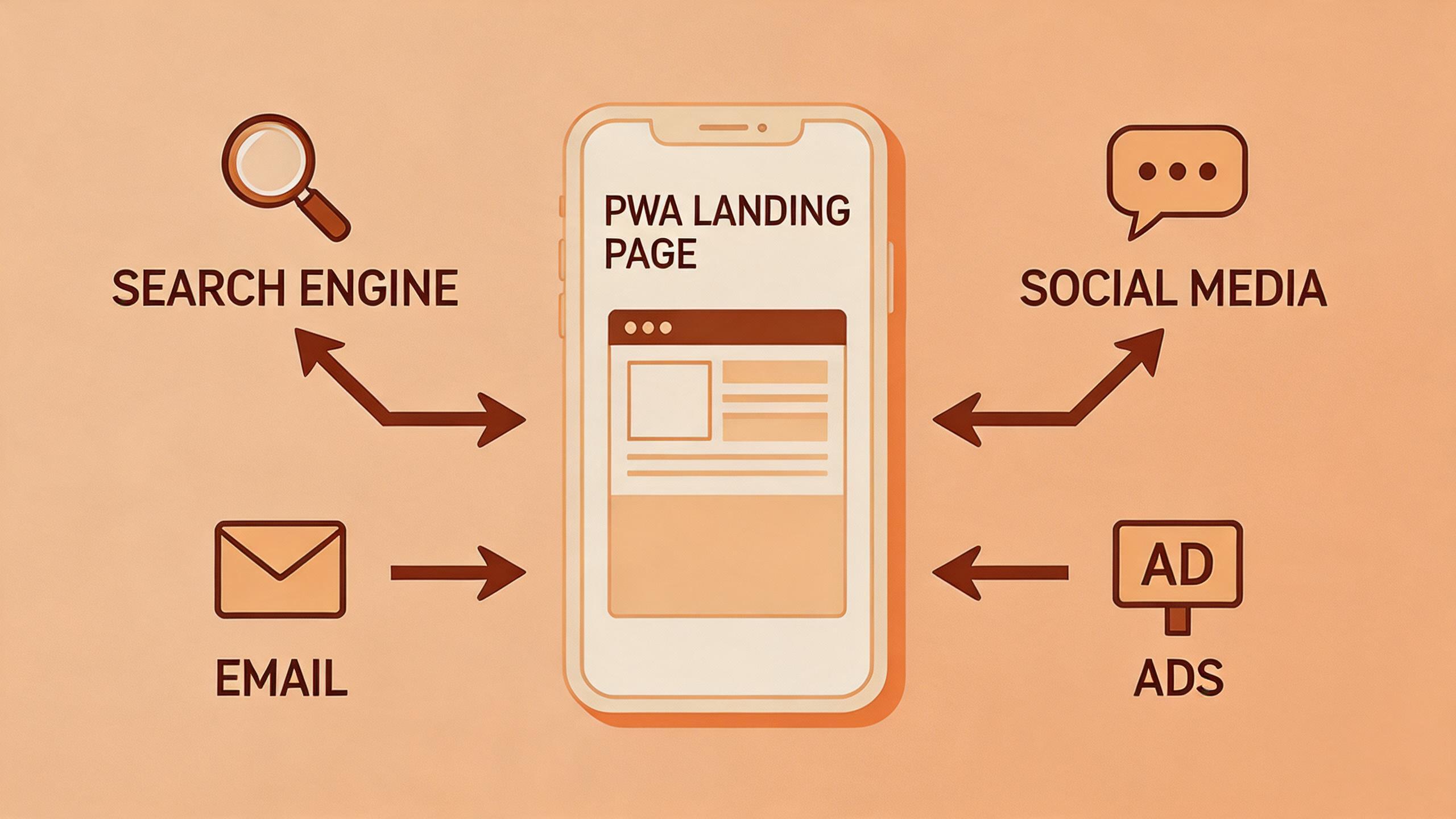
You own the install funnel. Users visit your landing page and install your app directly to their home screen. There is no algorithm between you and your user. Traffic comes from channels you control: your website, your ads, your email list, your SEO content. No platform can throttle or de-prioritize your install page.
Multi-channel traffic resilience. Because your PWA installs happen on your own domain, you can drive traffic from any source: Google Ads, Meta ads, organic search, email, influencer links, QR codes. If TikTok organic dies, your Google Ads and SEO channels still deliver installs to the same PWA page. If Google changes PMax, your Meta campaigns still work. You are diversified at the infrastructure level.
No app store gatekeeping. Google Play can change its policies and de-list your app. Apple can reject your update. TikTok can shadowban your content. With PWA, your app lives on your domain under your control. You decide when to update, what content to show, and who can install it.
Better install conversion rates. PWA installs are faster than traditional app downloads. Users skip the Play Store entirely and get the app on their home screen in seconds. Teams see up to 1.2x higher install conversion rates compared to Play Store links. Combined with push notifications that work after uninstall, PWA gives you both better acquisition and better retention.
Practical Strategy: TikTok + PWA Together
This does not mean you should abandon TikTok. It means you should restructure your TikTok strategy to work with PWA distribution:
Step 1: Shift TikTok content from promotional to educational
Create content that teaches users something valuable related to your app’s domain. For gaming: gameplay tips, strategy guides, community highlights. For AI apps: use case demonstrations, comparison content, trend analysis. Let the educational content build audience interest, then direct interested users to your PWA landing page.
Step 2: Use TikTok search optimization
Since TikTok now prioritizes search, optimize your video titles, descriptions, and captions for search queries your target users would type. Think like SEO for video: “best casual games 2026,” “AI dating app comparison,” “mobile game no download needed.” Include keywords naturally and add relevant hashtags.
Step 3: Drive TikTok traffic to your PWA landing page
Use your TikTok bio link and in-video CTAs to direct users to your PWA install page, not the Play Store. The PWA install page converts better and you keep 100% of revenue (no app store commission). Track TikTok-sourced PWA installs separately to measure the channel’s true ROI.
Step 4: Build parallel SEO and paid channels
While adapting your TikTok strategy, simultaneously invest in channels you control directly:
- SEO content: Blog posts, guides, and comparison content that ranks on Google and drives organic traffic to your PWA install page
- Google Ads: PMax and search campaigns targeting high-intent queries related to your app category
- Email / push: Build a list of interested users and send them directly to your PWA page
The goal is to make TikTok one of many traffic sources, not the primary one. When the next algorithm change hits (and it will), your distribution survives.
Action Plan
- Audit your current TikTok dependence. What percentage of your installs come from TikTok organic? If it is above 30%, you have a concentration risk that needs immediate diversification.
- Set up a PWA install page. If you do not have one, this is the first step. The PWA serves as your algorithm-independent distribution endpoint.
- Restructure TikTok content for search. Move from viral-optimized to keyword-optimized content. Add descriptive titles and searchable captions.
- Launch 2-3 parallel acquisition channels. Google Ads, SEO content, and Meta ads each driving traffic to your PWA page.
- Track channel-level ROI. Measure cost per PWA install from each channel. Invest more in channels with the best unit economics.
Algorithm changes are not exceptions — they are the norm. The teams that build distribution they own will always outperform the teams that rent distribution from platforms. PWA gives you that ownership.
Skip the app store. Go live instantly, keep 100% of your revenue.
ROiBest helps Android app teams launch PWAs — no review process, no 30% Google Play cut, and push notifications that work even after uninstall. Teams see up to 1.2x higher install conversion rates vs native app downloads.
 WebApp中文站
留下评论