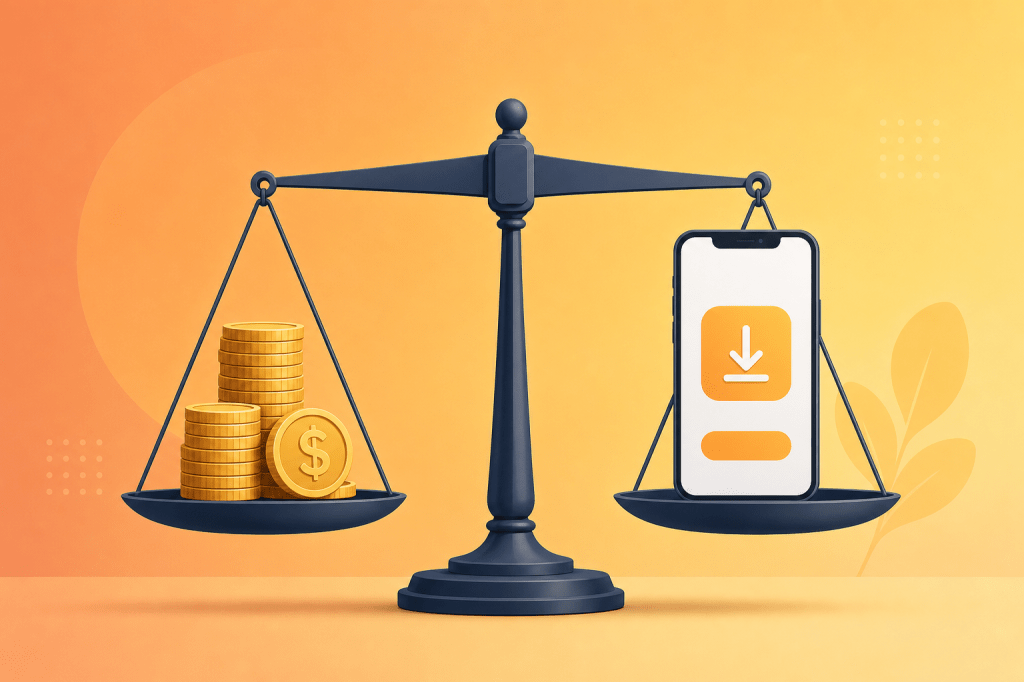
Meta has begun adding digital services tax surcharges across multiple markets in 2026 — covering the UK, France, Austria, Spain, Turkey, Italy, and several other jurisdictions. For advertisers running performance campaigns, these surcharges typically add 2-8% to effective CPM and CPA costs, with no corresponding improvement in ad delivery or targeting quality. For gaming apps, AI social apps, and other direct-response mobile advertisers, the math is getting tighter.
The conventional response is to optimize creative, tighten audiences, or push bid efficiency. But there’s a structural play that’s been working for teams who want to reduce platform dependency — not just optimize within it: Android PWA distribution.
→ Want to bypass Google Play entirely? See how ROiBest PWA works — no submission, no cut, 1.2x installs.
What Meta’s Digital Services Tax Surcharge Actually Costs You
The digital services tax surcharges Meta began passing through to advertisers aren’t just a line item. They compound across your entire Meta spend. If you’re running €100K/month in EU markets, a 5% average surcharge adds €5,000/month in costs that produce zero additional impressions, clicks, or conversions. Annualized, that’s €60,000 in platform overhead that used to go toward actual media delivery.
For gaming app publishers and AI social app teams who already operate on thin unit economics — where a €0.50 CPI difference can flip a campaign from profitable to underwater — this isn’t an abstract concern. It’s a direct margin compression that needs a structural answer, not just a creative refresh.
What makes the surcharge particularly difficult to absorb is that it’s additive to existing platform cost pressures: rising CPMs driven by advertiser competition, Meta’s continued push toward Advantage+ automation that reduces transparency, and increasing ad review friction for categories that Meta’s policy teams have been tightening around (gaming in-app purchase mechanics, AI social content).
Why Platform Dependency Is the Underlying Problem

The Meta digital services tax is the latest instance of a structural pattern that’s been building for years: app distribution teams that run their entire install funnel through a single platform — typically the App Store or Google Play for distribution and Meta or TikTok for paid acquisition — are exposed to every policy, pricing, and algorithm decision that platform makes.
When Google Play changes its billing policies, you pay more. When Meta changes its ad review standards for gaming or AI content, your approval rates drop. When Meta introduces a new tax surcharge for EU markets, your effective CPA rises. None of these events are within your control. And the more concentrated your distribution model, the more each of these changes hits you directly.
Android PWA distribution doesn’t eliminate platform dependency — you still need traffic sources. But it removes one of the most costly dependencies: the Google Play distribution tax (30% on in-app purchases), the Google Play review timeline that slows your time-to-market, and the Google Play policy exposure that can result in app removal for content that’s borderline under their terms.
How Android PWA Reduces Your Real Cost Per Install
The financial case for Android PWA distribution starts with the 30% Google Play cut, but it goes further than that. Here’s a complete picture of where the cost differences accumulate:
No 30% revenue share: Every euro of in-app purchase revenue that goes through Google Play loses 30% (15% for subscriptions after year one in some markets). A game that generates €1M/month in Android in-app purchases keeps €700K after Google’s cut. Through PWA, that same €1M stays at €1M — a €300K/month difference that can fund significant additional paid acquisition.
1.2x install conversion rate: PWA installs convert at approximately 1.2x the rate of Google Play installs for equivalent traffic, because the “install” is a simple browser action — tap “Add to Home Screen” — rather than a multi-step process that requires a Google account sign-in, download confirmation, and waiting for package download. Lower friction at the install step means the same paid traffic budget generates more installs.
Post-uninstall push notifications: Push notifications through PWA (via Chrome’s Web Push API) work even after a user removes the app icon from their home screen, as long as they haven’t explicitly revoked notification permissions. For gaming apps and AI social apps where re-engagement is critical to LTV, this capability has meaningful retention value — and it doesn’t require additional paid media spend to reach lapsed users.
Zero review timeline: Google Play app reviews for new submissions or updates typically take 3-7 business days, and reviews can result in rejection that delays your timeline significantly. PWA updates deploy instantly, without review. This means A/B testing your install flow, updating promotional content for seasonal events, or fixing a conversion bug can happen in hours rather than days.
You can find more context on the structural comparison between PWA and traditional app stores in our AI content compliance and PWA distribution guide and the Google Customer Match migration and PWA data ownership overview. For the complete framework, see the Google Play alternative distribution pillar guide.
The Meta Tax + Google Play Cut Compound Effect
Here’s a scenario that’s becoming common for mid-sized gaming app teams: they’re running €50K/month in Meta spend to drive Android installs through Google Play, with a 30% revenue share going to Google on all in-app purchases.
With the new Meta digital services tax surcharges in EU markets (averaged across their geo mix), effective Meta spend increases by 4%. Their CPA rises from €2.00 to €2.08 — which doesn’t sound catastrophic but reduces their monthly install volume by roughly 1,800 installs at constant budget.
Meanwhile, the Google Play 30% cut on revenue means that if each installed user generates €8 LTV over 90 days, they’re only keeping €5.60 per user after the Play Store cut. At €2.00 CPA (their old target), they’re generating €3.60 in net contribution per user. At €2.08, that drops to €3.52 — a 2.2% margin compression just from the tax surcharge.
For teams operating at scale, these percentage points add up quickly. The combination of Meta tax increases and Google Play revenue sharing creates a margin structure that tightens quarterly, requiring either continuous optimization or a structural change.
Android PWA removes the 30% Google Play cut entirely, immediately turning €5.60 per user into €8.00 per user. That 42% improvement in per-user net revenue changes the economics of paid acquisition significantly — you can absorb Meta surcharges more easily when your unit economics are fundamentally healthier.
Practical Concerns: Is PWA Right for Your App?
“Our users are used to Google Play. Will they install a PWA?”
Modern Android browsers (Chrome 76+, which represents the vast majority of Android devices) support the Add to Home Screen prompt natively. ROiBest’s PWA distribution platform optimizes the install prompt experience — timing, messaging, and placement — to achieve maximum conversion from the prompt. In practice, PWA install rates are equal to or better than Play Store installs for equivalent traffic because the friction is lower, not higher.
“Can PWA handle the same features as our native app?”
For gaming apps and AI social apps, the answer is yes for the core acquisition and retention use cases: push notifications, offline caching, camera and microphone access (for AI social features), payment processing, and fast loading. PWA doesn’t cover all native capabilities (Bluetooth, some hardware sensors) but covers everything a consumer acquisition funnel typically requires.
“What about Google Ads? Can we still run UAC and PMAX for PWA installs?”
Yes. Google Ads campaigns can drive traffic to your PWA landing page just as they drive traffic to any web URL. The conversion event is the PWA install (Add to Home Screen action), which can be tracked via GA4 and reported back to Google Ads for Smart Bidding optimization. This means you can use PWA distribution with Google’s acquisition tools without sacrificing campaign optimization.
Getting Started: Three Steps to Reduce Platform Tax Exposure
- Audit your current cost structure: Add up what you’re paying in Google Play revenue share, Meta DST surcharges, and any other platform-specific fees. This is your baseline for measuring the ROI of moving to PWA distribution.
- Run a PWA install pilot in one geo: Start with a market where you have existing Meta or Google Ads spend and measure PWA install conversion rate against your Play Store install rate for the same creative and audience targeting. Most teams see 1.0x-1.3x install rate improvement in the first 30-day test.
- Work with ROiBest to launch your PWA: ROiBest handles the technical PWA package creation, hosting, install prompt optimization, and push notification setup. Your team focuses on traffic acquisition and business metrics — not web technology infrastructure.
Summary: The Structural Answer to Rising Platform Costs
Meta’s digital services tax surcharges are a signal, not just a cost item. They signal that platform costs for user acquisition and distribution will continue to rise. The teams that will maintain healthy unit economics in this environment aren’t just the ones that optimize best within existing platform structures — they’re the ones that reduce platform dependency by diversifying how they distribute and monetize.
Android PWA distribution is the most direct lever available for removing the Google Play 30% cut, and it works alongside your existing paid acquisition channels, not instead of them. As Meta platform costs rise, having a distribution model that keeps more of your revenue per user makes every paid acquisition dollar go further.
Skip the app store. Go live instantly, keep 100% of your revenue.
ROiBest helps Android app teams launch PWAs — no review process, no 30% Google Play cut, and push notifications that work even after uninstall. Teams see up to 1.2x higher install conversion rates vs native app downloads.
 WebApp中文站
留下评论