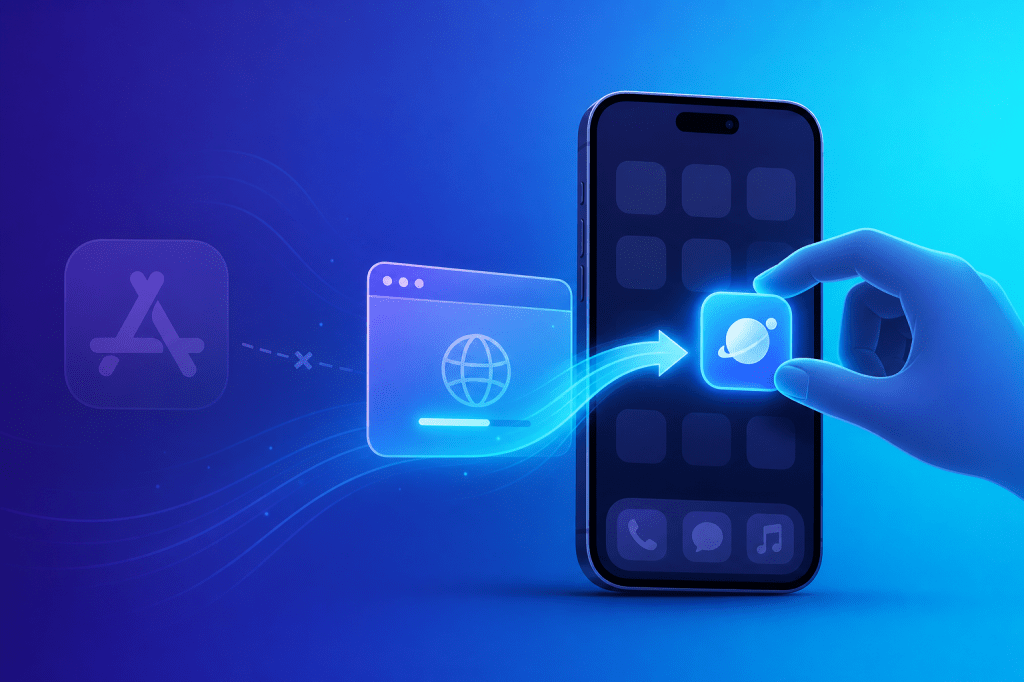
Google just killed its Display & Video 360 reach and frequency planning tools. If you missed the announcement, here is what it means in plain language: Google is telling advertisers that awareness campaigns are yesterday’s game. The money — and the infrastructure — is moving toward measurable conversions. For Android app teams still distributing through Google Play, this shift carries an uncomfortable implication. Google is optimizing its ad platform for conversion tracking, but Google Play’s install flow remains one of the leakiest funnels in mobile distribution. PWA distribution sidesteps that leak entirely — and ROiBest handles the technical build so your team can focus on growth.
→ Want to bypass Google Play entirely? See how ROiBest PWA works — no submission, no cut, 1.2x installs.
What Google Cutting Its Planning Tools Actually Signals
In May 2026, Google confirmed the retirement of reach planning and frequency management tools within Display & Video 360. These tools were designed for brand awareness campaigns — helping advertisers estimate how many people they could reach and how often. Their removal is not a cost-cutting exercise. It is a strategic declaration: Google is consolidating its ad platform around conversion-based objectives.
This aligns with a pattern that has been building for over a year. Google’s Performance Max campaigns already prioritize conversion actions over impression delivery. The Privacy Sandbox changes are restructuring how conversion data flows between advertisers and Google’s infrastructure. Enhanced Conversions — which use first-party data to improve attribution accuracy — are now the recommended tracking standard across Google Ads.
The message to app distributors is clear: if your install funnel cannot cleanly attribute a conversion back to an ad click, you are going to pay more for worse results. Google’s ad algorithm will increasingly favor destinations that provide fast, measurable conversion signals. And that is exactly where the Google Play install flow starts to fall apart.
Why Google Play’s Install Funnel Breaks Under a Conversion-First Ad Strategy
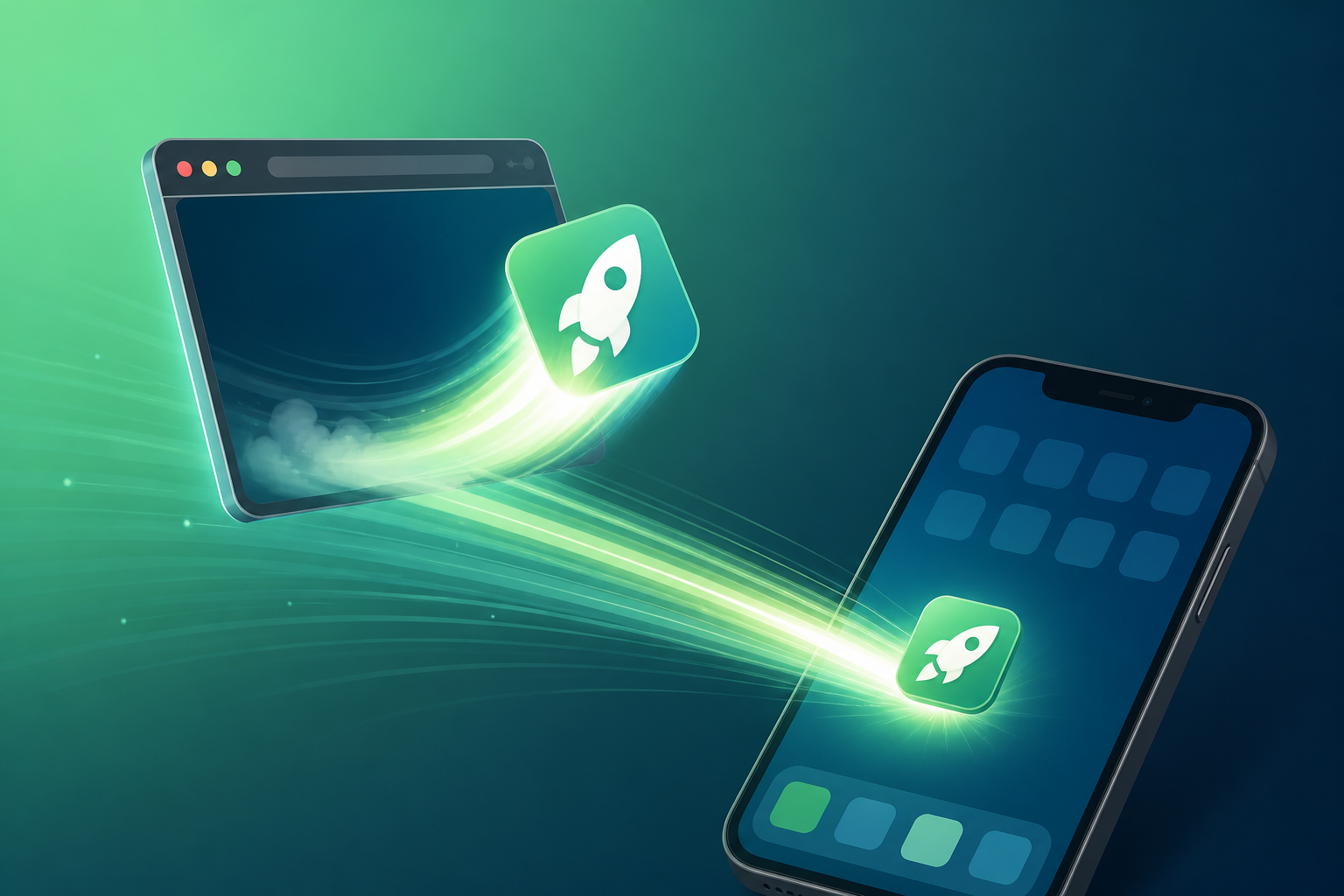
Consider the typical user journey when a Google Ads campaign drives traffic to a Google Play listing. The user clicks an ad, leaves the browser, opens the Play Store app, loads the listing page, reads reviews, scrolls past screenshots, and then — maybe — taps “Install.” According to research from AppsFlyer, the average drop-off rate between ad click and completed install for Google Play listings is between 40% and 60%. For categories like utilities, finance, and lifestyle apps, the number can exceed 70%.
That is not a creative problem or a targeting problem. It is a structural problem. Every redirect between your ad and the completed install is a point where the user can drop off, and where attribution data can degrade. The Play Store introduces at least three such redirects: browser-to-store handoff, store listing load, and install confirmation. Each one adds latency and friction.
There are also conversion tracking complications. Google Play installs are attributed through Google’s own ecosystem, which means the attribution data lives inside Google’s walled garden. Cross-referencing Play install data with your own analytics stack, your CRM, or your server-side conversion API requires workarounds that most app teams never fully implement. The result is a reporting gap — you know someone installed, but the connection between the ad click and what happened inside the app is fuzzy at best.
Now overlay Google’s new conversion-first ad strategy on top of this broken funnel. Google’s algorithm wants clean conversion signals. The Play Store install flow provides noisy, delayed, multi-step signals. The algorithm will optimize away from destinations that produce weak signals — which means your Google Play campaigns will gradually become more expensive and less efficient, even if nothing about your product has changed.
How PWA Distribution Aligns Perfectly With Google’s Conversion Shift
A Progressive Web App installs directly from a landing page. The user clicks your ad, lands on your page, and taps an “Add to Home Screen” prompt. The install happens inside the browser — no redirect to an app store, no listing page to scroll, no separate app to download. The entire journey from ad click to installed app can happen in under three seconds.
From a conversion tracking perspective, this is transformative. The install event fires on your own domain, which means you can track it with your existing analytics infrastructure — Google Analytics, your server-side conversion API, Meta’s CAPI, or any other first-party tracking tool. There is no walled garden between the ad click and the conversion. The signal is clean, immediate, and fully within your control.
This matters enormously in Google’s new conversion-focused ad environment. When your install conversion fires from your own domain with a clear event ID, Google’s algorithm receives a high-quality signal almost instantly. Better signals lead to better optimization, which leads to lower CPAs and higher ROAS. Teams that have made this switch report install conversion rates up to 1.2x higher than their Google Play listings — not because the product changed, but because the funnel friction disappeared.
PWA distribution also eliminates the 30% revenue cut that Google Play charges on in-app purchases and subscriptions. For apps generating $100K/month in subscription revenue, that is $30K/month going directly back to the business. Over a year, the savings alone can fund an entire marketing team. As we covered in our analysis of Google Play alternatives for Android app distribution, the financial case for leaving Google Play has never been stronger.
Real Numbers: What Changes When You Switch to PWA
The theory is compelling, but what do the numbers actually look like? Here are the metrics that matter most, based on data from teams that have transitioned from Google Play to PWA distribution with ROiBest.
Install conversion rate: Google Play listings typically convert ad traffic at 35-55%. PWA install flows, optimized with a clean landing page and immediate install prompt, convert at 55-70%. The difference comes entirely from removing friction — fewer steps, faster load, no store redirect.
Time to install: A Google Play install takes an average of 15-45 seconds from ad click to completed install, depending on app size and network speed. A PWA install completes in 2-4 seconds. That speed difference is not trivial — it means fewer users abandon the process and more ad clicks convert to actual installs.
Revenue retention: Google Play takes a 15-30% cut of all in-app transactions (15% for the first $1M, 30% thereafter). PWA transactions happen on your own payment infrastructure, with standard payment processing fees of 2-3%. For a subscription app doing $50K/month, the difference is roughly $7,000-$14,000 per month in retained revenue.
Attribution clarity: With Google Play, install attribution depends on Google’s reporting. With PWA, every install fires a conversion event on your own domain. You can match it to the exact ad click, campaign, and creative that drove it. This clean attribution feeds directly into Google’s conversion-focused ad optimization — creating a virtuous cycle where better data produces better results.
Push notification reach: Unlike native app uninstalls that sever all communication, PWA push notifications can continue to reach users even after they remove the icon from their home screen. This extends the lifetime value of every acquired user and gives your re-engagement campaigns a longer runway.
Three Steps to Move Your Android Distribution to PWA
Switching from Google Play to PWA distribution is a business decision, not a technical project. ROiBest handles the entire technical implementation — the build, the hosting, the push notification infrastructure, the install flow optimization. Your team’s role is strategic.
Step 1: Identify your highest-value acquisition channels. Look at which Google Ads campaigns and traffic sources are driving your most profitable installs. These are the channels where clean conversion tracking will have the biggest impact on your ROAS. Prioritize moving these campaigns to PWA landing pages first.
Step 2: Set up conversion tracking on your own domain. Work with ROiBest to configure install events that fire through your existing analytics stack. This means your Google Ads Enhanced Conversions, your server-side APIs, and your internal dashboards all receive the same clean signal. No more reconciling Google Play Console data with your ad platform reports.
Step 3: Run a parallel test for 2-4 weeks. Keep your Google Play campaigns running alongside your new PWA campaigns. Compare install rates, CPA, and downstream revenue metrics side by side. Teams typically see the PWA advantage show up within the first week — and the gap widens as Google’s algorithm learns from the cleaner conversion signals.
The teams seeing the strongest results are those in verticals where Google Play policies create additional friction — finance apps, dating apps, content platforms, and any category where policy reviews slow down updates or risk account suspension. For these teams, PWA distribution does not just improve metrics; it removes an existential risk.
Common Concerns About PWA Distribution
“Is our app suitable for PWA?”
If your app runs in a browser — which most modern web-based apps do — it can be delivered as a PWA. Apps built on frameworks like React, Vue, or Angular are natural fits. Even apps with complex functionality like real-time chat, video streaming, and in-app purchases work well as PWAs. The main exception is apps that require deep hardware access (Bluetooth, NFC, specific sensor APIs), though even these limitations are narrowing as browser APIs expand.
ROiBest evaluates your app’s technical requirements during onboarding and recommends the right approach. Many teams are surprised to learn that their app is already 90% PWA-ready.
“Will users accept an app that doesn’t come from Google Play?”
User behavior data tells a clear story: users care about the experience, not the distribution channel. A PWA that installs in 3 seconds and works smoothly outperforms a native app that takes 30 seconds to download and requires 200MB of storage. The “Add to Home Screen” experience is native-feeling on modern Android devices — the app icon appears on the home screen, the app launches in its own window, and push notifications work exactly like native ones.
In markets across Southeast Asia, Latin America, and parts of Europe, PWAs from major brands like Twitter (now X), Starbucks, and Pinterest have normalized the experience. Users in these regions often prefer PWAs because they use less storage and work on lower-spec devices.
“What about discoverability without the Play Store?”
Google Play’s organic discovery is already minimal for most apps outside the top 200. If your primary acquisition channel is paid ads, you are already driving users directly to a destination — the question is just whether that destination is a Play Store listing or your own optimized landing page. With PWA, you control the entire experience. And as AI-powered ad platforms like ChatGPT begin offering new distribution surfaces, having a direct-install PWA gives you access to channels that Google Play listings simply cannot reach.
Google’s Conversion Focus Is Your Opportunity
Google killing its Display & Video planning tools is not an isolated product decision. It is a signal that the entire Google Ads ecosystem is reorganizing around conversion quality. Advertisers who can deliver clean, fast, server-side conversion signals will be rewarded with better optimization and lower costs. Advertisers stuck in multi-step, walled-garden install funnels will pay the price.
PWA distribution is the natural response to this shift. It gives you direct control over your install funnel, clean conversion tracking, zero platform commission, and an install experience that converts at higher rates than any app store listing. ROiBest builds and manages the entire PWA infrastructure so your team can focus on what matters — acquiring users and growing revenue.
The teams that move first will have a compounding advantage. Better conversion signals today mean better algorithm optimization tomorrow, which means lower CPAs next month. Every week you wait is a week of paying more for worse results through a funnel that Google’s own strategy is making obsolete.
Skip the app store. Go live instantly, keep 100% of your revenue.
ROiBest helps Android app teams launch PWAs — no review process, no 30% Google Play cut, and push notifications that work even after uninstall. Teams see up to 1.2x higher install conversion rates vs native app downloads.
 WebApp中文站
留下评论