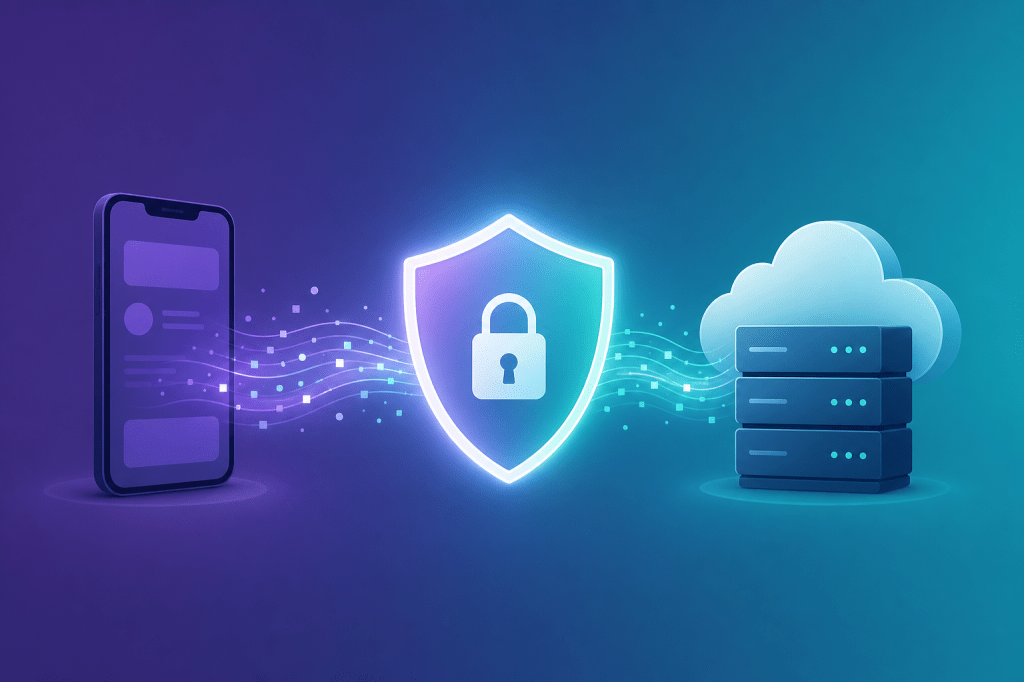
The 2026 Upfronts made one thing unmistakably clear: measurement is now the single most important topic in advertising. Every major buyer is demanding transparent, verifiable conversion data before committing budgets. For app distribution teams relying on Google Play, this creates a fundamental problem — you don’t own your install data. PWA distribution flips this equation entirely, giving you complete visibility into every user touchpoint from ad click to install to first session.
→ Want to bypass Google Play entirely? See how ROiBest PWA works — no submission, no cut, 1.2x installs.
Why Measurement Became the #1 Issue at the 2026 Upfronts
The 2026 Upfront presentations from major platforms all converged on a single theme: advertisers are no longer willing to spend without clear measurement. CTV (Connected TV) advertisers pushed hardest — demanding cross-platform attribution that shows exactly which ad exposure led to which conversion. But the ripple effect extends to every digital channel, including app install campaigns.
Three shifts are driving this measurement obsession:
- Privacy regulations tightened attribution windows: With Apple’s ATT framework now two years mature and Google’s Privacy Sandbox rolling out on Android, the old certainty of deterministic user-level tracking is gone. Advertisers need new measurement approaches that work within privacy constraints.
- Budget scrutiny increased: In a tighter economic environment, every marketing dollar needs justification. CMOs are asking for incrementality proof — not just “did this user see our ad and install,” but “would this user have installed without the ad?”
- Platform-reported metrics lost trust: When platforms grade their own homework, advertisers get skeptical. The Upfronts showed a clear demand for third-party verification and advertiser-owned data pipelines.
For app teams distributing through Google Play, these measurement challenges are compounded by the app store’s data limitations. Understanding the full landscape of Google Play alternatives is essential context for the measurement discussion.
Google Play’s Measurement Black Box
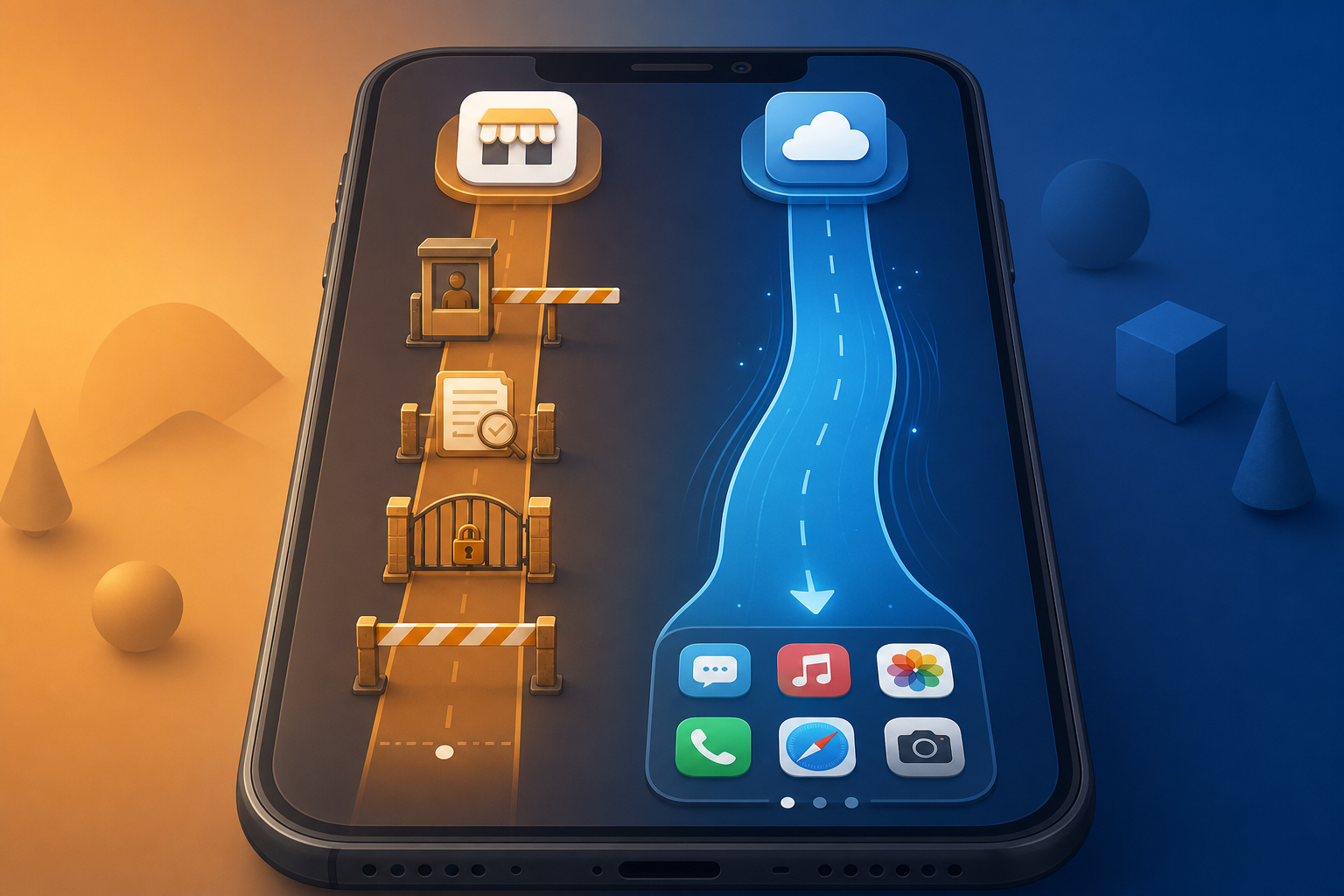
When your app lives on Google Play, your measurement capabilities are fundamentally constrained:
Install attribution opacity: Google Play controls the install event. You see that a user installed, but the path from ad click to Play Store page to install involves multiple redirects where tracking parameters can be lost. Deep link handling through the Play Store is notoriously inconsistent across Android manufacturers and OS versions.
No control over the install experience: Between your ad and the actual install, the user passes through Google Play’s UI — search results, app listing page, download progress, permissions dialog. Each step introduces friction and data gaps. You can’t A/B test the install flow, can’t add tracking pixels to the Play Store page, and can’t customize the experience based on which ad campaign drove the visit.
Post-install data silos: Google Play provides aggregate install data through the Play Console, but this data operates on a different timeline and granularity than your ad platform data. Matching Play Console installs to specific ad campaigns requires probabilistic matching — inherently less reliable than deterministic tracking.
Revenue reporting delays: In-app purchase data from Google Play has a 24-48 hour reporting lag. For performance advertisers optimizing campaigns in real-time, this delay means you’re always making budget decisions based on stale conversion data.
How PWA Distribution Solves the Measurement Problem
PWA (Progressive Web App) distribution removes every intermediary between your ad and the user’s device. When a user clicks your ad and lands on your PWA install page, you own the entire data pipeline. Here’s what changes:
Complete First-Party Data Ownership
With PWA distribution, the install happens on your domain. You control every tracking pixel, every event fire, every data point. This means:
- Deterministic attribution: You can pass campaign parameters (UTM tags, ad_id, creative_id) directly from the ad click through to the install event without losing data through intermediary redirects.
- Real-time conversion data: Install events fire the moment the user adds the PWA to their home screen — no 24-48 hour delays from app store processing.
- Full funnel visibility: Track every micro-conversion: page load, scroll depth, install prompt shown, install prompt accepted, first app open, registration, first purchase. Each event connects to the original campaign attribution.
Server-Side Measurement Built In
Because the PWA install happens on your web infrastructure, you can implement server-side tracking from day one:
- Conversion API integration: Send install events directly to Meta’s CAPI, Google’s Enhanced Conversions, or TikTok’s Events API from your server — immune to ad blockers and browser privacy restrictions.
- Cross-device tracking: When users log in to your PWA, you can link their activity across devices using your own authentication system, without relying on third-party device graphs.
- Incrementality testing: With full control over the install experience, you can run proper hold-out tests — showing different install flows to different cohorts and measuring true incremental lift.
This measurement advantage mirrors the broader trend we explored in how Google’s Data Manager API migration reinforces the value of PWA-based first-party data.
Real Numbers: PWA vs Google Play Measurement Comparison
Based on aggregated data from app teams that have switched from Google Play to PWA distribution:
- Attribution accuracy: PWA achieves 95%+ deterministic attribution vs 60-75% for Google Play installs (where the gap is filled with probabilistic matching).
- Data freshness: PWA install events available in under 5 seconds vs 24-48 hours for Play Store console data.
- Funnel visibility: Average of 8 trackable events between ad click and first purchase via PWA vs 2-3 events via Google Play.
- Campaign optimization speed: Teams report making budget reallocation decisions 3-4x faster with PWA data, because they don’t have to wait for Play Store data reconciliation.
The measurement gap is especially pronounced for gaming and AI social app verticals, where the path from install to revenue involves multiple in-app steps that Google Play simply doesn’t track.
Addressing Common Measurement Concerns
“Can PWA track as reliably as native app SDKs?”
Yes — and often more reliably. Native app SDKs depend on the operating system’s permission framework (ATT on iOS, Android privacy sandbox). PWA measurement uses web standards (first-party cookies, server-side events) that operate independently of mobile OS restrictions. As privacy frameworks tighten, web-based measurement actually becomes more stable than native app measurement.
“How do we handle measurement for users who don’t install?”
This is where PWA excels. A user who visits your PWA but doesn’t install is still tracked as a web visitor — you see their entire session. With Google Play, a user who visits your listing but doesn’t install generates almost no data. PWA gives you the full picture of your install funnel, including drop-off points.
“Will ad platforms accept PWA install events for optimization?”
All major ad platforms (Meta, Google, TikTok) accept server-side conversion events. PWA install events sent via CAPI or Enhanced Conversions are treated identically to native app install events for campaign optimization. The algorithm doesn’t care whether the install was native or PWA — it optimizes for the conversion signal you send. As the TikTok algorithm update shows, platforms are moving toward signal-agnostic optimization.
Making the Switch: What Decision-Makers Need to Know
For app distribution teams evaluating PWA as a measurement strategy, three factors matter:
- Implementation timeline: PWA distribution can be operational in days, not months. The measurement infrastructure — tracking pixels, server-side events, attribution setup — deploys alongside the PWA itself.
- No revenue share: Beyond measurement benefits, PWA distribution eliminates Google Play’s 30% revenue cut. Every in-app purchase goes directly to you, and you have real-time visibility into revenue data for campaign optimization.
- Risk reduction: No app store review process means no rejection risk and no sudden de-listing. Your measurement setup remains stable because you control the distribution infrastructure — no dependency on app store policy changes.
The 2026 Upfronts message is clear: the future belongs to advertisers who own their measurement data. PWA distribution is the fastest path to that ownership for Android app teams.
Skip the app store. Go live instantly, keep 100% of your revenue.
ROiBest helps Android app teams launch PWAs — no review process, no 30% Google Play cut, and push notifications that work even after uninstall. Teams see up to 1.2x higher install conversion rates vs native app downloads.
 WebApp中文站
留下评论