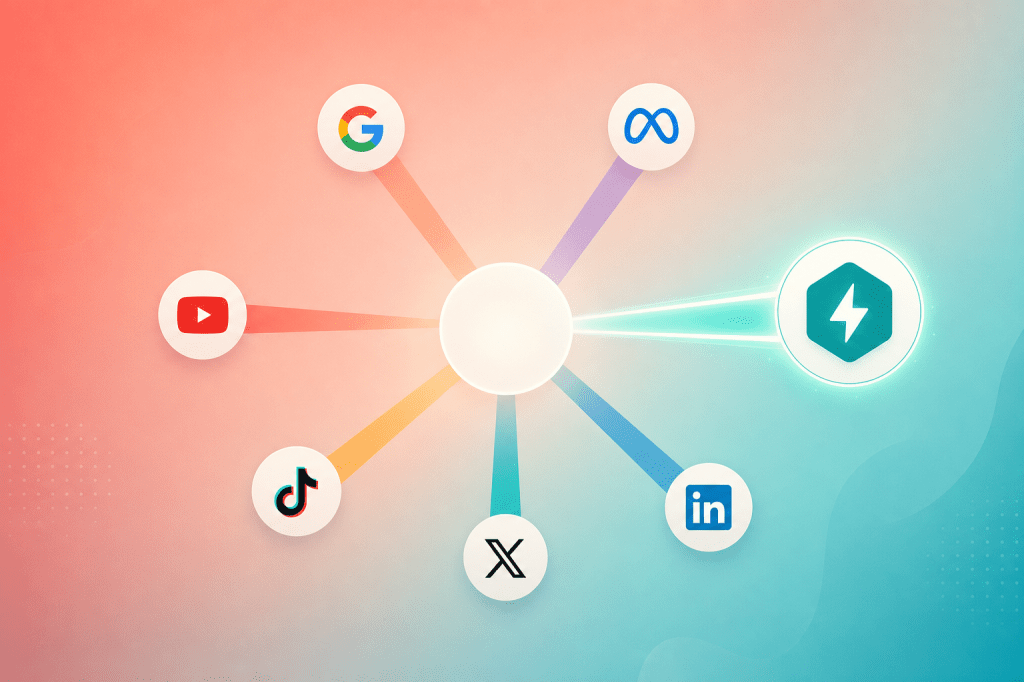
If you run Android app campaigns through Google Performance Max, you already know the promise: one campaign, every Google channel, maximum reach. But here is the question nobody at Google wants you to ask — where is your PMax budget actually going, and how much of it is generating real installs?
In 2026, PMax campaigns spread your spend across Search, Display, YouTube, Discover, Gmail, and Maps. The algorithm decides the split. You do not. And for app teams distributing through Google Play, the inefficiency compounds: you pay for the click, you pay for the install friction, and then Google takes 15-30% of every transaction that follows.
There is a better model. Teams that pair their PMax campaigns with PWA-based distribution — bypassing Google Play entirely — are seeing lower cost-per-install, faster user onboarding, and full revenue retention. This article breaks down exactly where PMax budgets leak, why PWA landing pages fix the problem, and what the numbers look like when you make the switch.
→ Want to bypass Google Play entirely? See how ROiBest PWA works — no submission, no cut, 1.2x installs.
The Problem: Where Your PMax Budget Actually Goes
Google does not give you a channel-level breakdown inside PMax. That is by design. But third-party attribution data and Google’s own Insights tab reveal consistent patterns that should concern every app distribution team.
Display Network absorbs the largest share — with the weakest intent
Multiple analyses of PMax campaign asset-group reporting in 2026 show that 50-70% of impressions land on the Google Display Network. Display placements include banner ads on low-quality websites, in-app interstitials, and programmatic inventory that users scroll past in under a second. For app install campaigns, Display clicks rarely convert to completed installs because the user journey involves:
- Clicking a banner ad (often accidentally)
- Being redirected to the Google Play Store
- Waiting for the store page to load
- Reading reviews, checking permissions, deciding whether to download
- Waiting for the app to download and install
- Finally opening the app — if they remember to
Every step is a drop-off point. Industry data consistently shows that Display-driven app installs cost 3-5x more per completed install than Search-driven installs, yet PMax keeps routing budget there because impressions are cheap and the algorithm optimizes for volume, not quality.
YouTube gets budget, but app install intent is low
YouTube placements through PMax typically account for 15-25% of spend. Video ads can build awareness, but they are poor at driving immediate app installs. The user sees a six-second bumper ad, maybe a skippable in-stream ad, and then returns to watching content. The path from YouTube ad to completed Google Play install includes multiple context switches, and conversion rates from YouTube to app install typically sit below 1%.
Search gets the smallest share — despite having the highest intent
Here is the painful irony: Google Search placements, where users are actively looking for solutions your app provides, typically receive only 10-20% of PMax budget. These are the clicks most likely to convert, yet the algorithm under-allocates to Search because the cost-per-click is higher and PMax optimizes for overall volume metrics rather than downstream value.
The Google Play funnel adds another layer of waste
Even when PMax does generate a high-intent click, the Google Play Store introduces its own conversion friction. Industry benchmarks show that Google Play store page visit-to-install rates average 25-35% for paid traffic. That means for every 100 users you pay to send to your store listing, 65-75 leave without installing. You paid for those clicks. Google keeps the money. And for the users who do install and make purchases, Google takes an additional 15-30% commission.
The total cost of acquiring a paying user through PMax + Google Play is significantly higher than most teams realize when they only look at cost-per-install metrics. Factor in the Play Store commission on lifetime revenue, and the true customer acquisition cost can be 40-60% higher than your dashboard suggests.
How PWA Distribution Solves the PMax Efficiency Problem
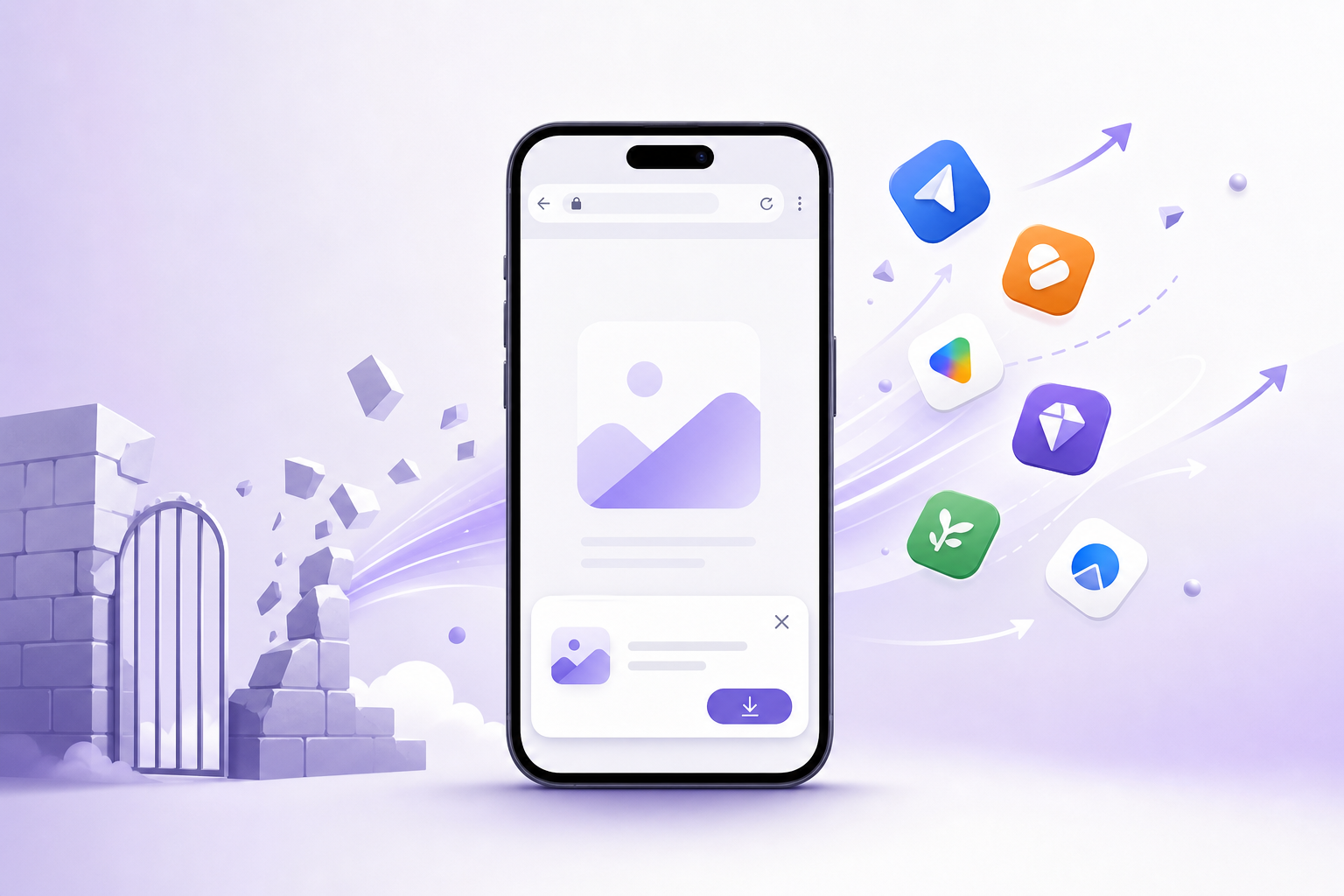
Progressive Web Apps change the equation fundamentally — not by fixing PMax’s channel allocation (you still cannot control that), but by eliminating the Google Play bottleneck that makes low-intent PMax channels so wasteful.
When you point your PMax campaign at a PWA landing page instead of a Google Play store listing, the user journey compresses dramatically. For a deeper understanding of how this model replaces traditional app store distribution, see our Google Play alternative distribution guide.
One-tap install eliminates the store page drop-off
A PWA installs directly from the browser. The user clicks your PMax ad, lands on your page, and sees an install prompt. One tap. The app is on their home screen. There is no store page to browse, no reviews to second-guess, no download progress bar to watch. The entire Google Play funnel — which loses 65-75% of visitors — is replaced by a single action.
This matters most for exactly the PMax channels that waste the most budget. Display Network clicks, which have low intent, are far more likely to convert when the install barrier is a single tap versus a multi-step store experience. Even YouTube-driven traffic, which historically converts poorly for app installs, shows meaningfully higher install rates when the destination is an instant PWA install rather than a Play Store redirect.
No commission means your PMax ROI calculation changes
When you distribute through Google Play, your effective revenue per user is reduced by 15-30% before you calculate return on ad spend. With PWA distribution, you keep 100% of in-app revenue. This changes the math on which PMax campaigns and ad groups are profitable. Campaigns that appeared to run at breakeven or slight loss through Play Store distribution can become clearly profitable when the commission disappears.
As we explored in our analysis of cutting app distribution costs with PWA, the savings extend beyond just the commission — you also eliminate Play Store compliance costs, listing maintenance overhead, and the risk of sudden policy-driven delistings.
Faster iteration on landing pages improves PMax signal quality
PMax campaigns learn from conversion signals. When your conversion event is a Google Play install, the signal is delayed (download time, install time, first open) and noisy (store page browsing behavior pollutes the data). With PWA distribution, the conversion event — install to home screen — happens in seconds. PMax receives a cleaner, faster signal, which theoretically allows the algorithm to optimize more effectively over time.
You can also A/B test PWA landing pages without going through any app store review process. Change the messaging, adjust the install flow, test different value propositions — all deployed instantly. When you find a landing page variant that converts Display traffic efficiently, you have effectively turned PMax’s weakest channel into a productive one.
Real Comparison: Install Rates, Revenue, and Launch Speed
Let us put concrete numbers around the difference between PMax campaigns pointing at Google Play versus PMax campaigns pointing at PWA landing pages.
Install conversion rates
Teams using ROiBest’s PWA distribution report install conversion rates that are up to 1.2x higher than comparable Google Play install campaigns. The primary driver is the elimination of the store page funnel. When a user lands on a well-designed PWA page with a clear install prompt, the path to installation is measured in seconds rather than minutes.
This improvement is not uniform across all PMax channels. The biggest gains come from the channels that traditionally perform worst for app installs:
- Display Network: Install rates improve most significantly because low-intent users who would never complete a multi-step Play Store install will often tap a single install button
- YouTube: Users coming from video ads are in a consumption mindset; a frictionless one-tap install captures them before they context-switch back to their video
- Search: Already high-intent, but still benefits from the reduced friction; improvements are smaller but consistent
Revenue retention
The revenue impact is straightforward arithmetic but bears repeating because it directly affects PMax ROI calculations:
- Google Play distribution: You retain 70-85% of transaction revenue (after Google’s 15-30% commission)
- PWA distribution: You retain 100% of transaction revenue
For a team spending $50,000/month on PMax and generating $150,000 in gross app revenue, the difference between keeping $105,000-$127,500 (Play Store) and keeping $150,000 (PWA) is $22,500-$45,000 per month. That is $270,000-$540,000 per year — money that can be reinvested into PMax budget or other growth channels.
Launch speed and iteration
Google Play app submissions require review periods that typically take 1-7 days for updates and can stretch longer for new apps or policy-flagged content. PWA updates deploy instantly. This matters for PMax campaigns because:
- You can launch a campaign and have the destination live within hours, not days
- You can fix conversion issues the same day you identify them
- Seasonal or event-driven campaigns do not require advance planning around review timelines
- There is zero risk of a rejected update derailing a live campaign
For a more detailed look at how PMax conversion data interacts with distribution strategy, see our breakdown of Google Ads conversion shift and PWA advantage.
Push notifications after uninstall
One capability that fundamentally changes the lifetime value equation: PWA push notifications can continue to reach users even after they remove the app from their home screen. In native app distribution through Google Play, an uninstall means you lose that user permanently unless they reinstall. With PWA, the notification permission persists in the browser, giving you a re-engagement channel that does not exist in traditional app distribution. This extends the effective lifetime of every user your PMax campaign acquires.
Common Concerns Answered
“Will PMax campaigns work with PWA landing pages?”
Yes. PMax campaigns can point to any URL as a destination. A PWA landing page is simply a web URL — there is no technical incompatibility. You set up your PMax campaign with your PWA URL as the final URL, configure conversion tracking for the install event, and the campaign runs exactly as it would for any web destination. Google’s algorithm does not distinguish between a PWA landing page and any other web page.
“Do PWA apps feel like real apps to users?”
Modern PWAs on Android are virtually indistinguishable from native apps. They install to the home screen with a custom icon, launch in full-screen mode without browser chrome, support push notifications, work offline, and can access device features like camera and GPS. Users do not know or care whether the app was installed from Google Play or from a website. What they notice is that the install was faster and easier.
“What about users who specifically search for our app on Google Play?”
You are not required to choose one or the other. Many teams maintain a Google Play listing for organic discovery while using PWA as the primary destination for paid campaigns. This hybrid approach lets you capture Google Play organic traffic while avoiding the commission and conversion friction for your paid PMax traffic — which is typically the larger and more controllable channel.
“Is this approach suitable for our market?”
PWA distribution is particularly strong for teams targeting markets in Southeast Asia, Latin America, the Middle East, and Africa — regions where device storage is limited, data connections can be slow, and users are more likely to abandon large native app downloads. For Chinese app teams going overseas (chu hai), PWA distribution also eliminates the risk of Google Play policy enforcement, which has become increasingly aggressive around content and compliance requirements in 2026.
“What about iOS users?”
PMax campaigns on Google properties primarily reach Android users. iOS users accessing Google properties represent a small fraction of PMax impressions. For your Android audience — which is where PMax delivers the vast majority of app install volume — PWA distribution is a direct, fully functional replacement for Google Play.
Summary: Redirect PMax Budget Waste Into Real Growth
Google PMax is a powerful campaign type, but its black-box channel allocation means significant portions of your budget flow to low-intent placements. When those placements point at a Google Play store listing — with its multi-step install funnel and 15-30% revenue commission — the inefficiency compounds at every stage.
PWA distribution does not fix PMax’s channel allocation. What it does is make every channel in PMax more productive by removing the install friction that causes the most drop-off. Display clicks that used to bounce at the Play Store page now convert with a single tap. YouTube-driven traffic that used to lose interest during a download now installs instantly. And every dollar of revenue stays with you instead of being split with Google.
The teams seeing the best results are those that treat PWA not as a technical experiment but as a distribution strategy decision. They keep their PMax campaigns running, keep their targeting and creative optimization, and simply change where the traffic lands. The ROI improvement comes from the destination, not the campaign settings.
ROiBest handles the entire PWA setup — from building the app experience to configuring push notifications to optimizing the install flow. Your team focuses on PMax campaign management and creative strategy. ROiBest handles the technology that makes every PMax dollar work harder.
Skip the app store. Go live instantly, keep 100% of your revenue.
ROiBest helps Android app teams launch PWAs — no review process, no 30% Google Play cut, and push notifications that work even after uninstall. Teams see up to 1.2x higher install conversion rates vs native app downloads.
 WebApp中文站
留下评论