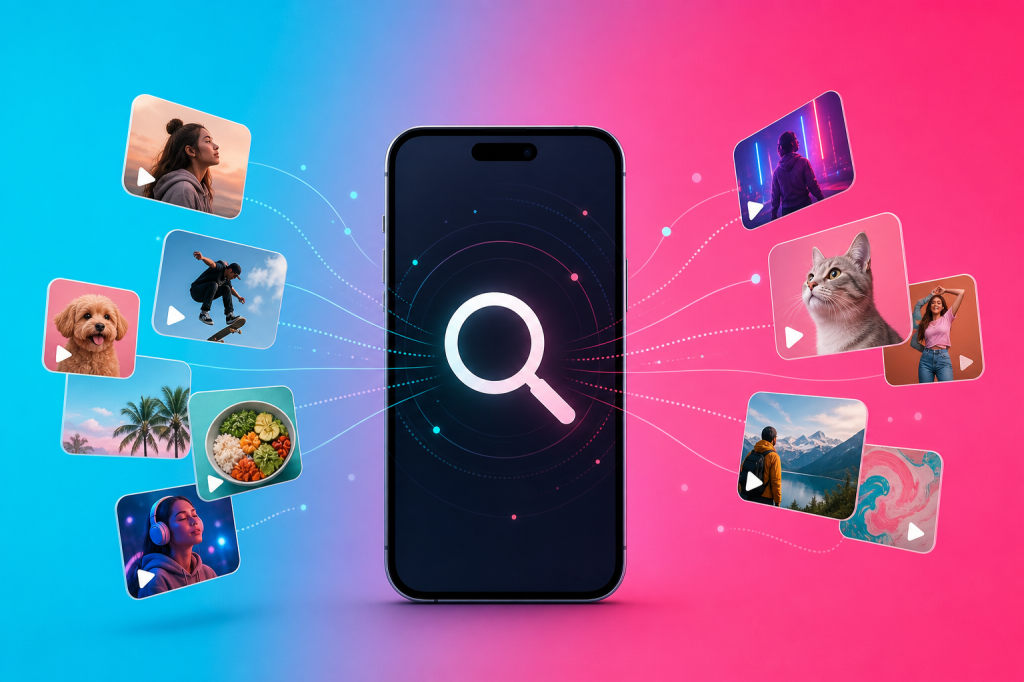
TikTok changed the rules in early 2026. The platform’s algorithm update shifted from pure engagement signals — watch time, shares, saves — to what TikTok internally calls “search-intent weighting.” According to Search Engine Journal, TikTok search queries grew 67% year-over-year, with the platform now processing over 3 billion searches per month (Search Engine Journal, 2026). That’s not a social media trend. That’s search engine behavior reshaping how users discover apps.
For app teams distributing Android products to global markets, this shift creates a real opening. When TikTok’s algorithm prioritizes content that answers search queries, well-optimized content becomes a direct acquisition channel. But traditional app distribution still funnels users through Google Play, adding friction between the content that hooks them and the install that converts them.
PWA distribution eliminates that friction. Instead of routing TikTok traffic to an app store listing, you send users to a PWA install page. No store redirect. No download wait. No 30% platform fee. This article breaks down what TikTok’s algorithm change means for app teams, why app store distribution can’t keep pace with content-driven discovery, and how PWA gives your team a structural advantage in 2026.
→ Want to bypass Google Play entirely? See how ROiBest PWA works — no submission, no cut, 1.2x installs.
TL;DR: TikTok’s 2026 SEO-first algorithm now prioritizes search-intent content over pure engagement, with platform searches growing 67% year-over-year (Search Engine Journal, 2026). PWA distribution captures this content-driven discovery traffic by converting users directly from TikTok — no app store redirect, no download wait, up to 1.2x higher install conversion rates versus Google Play.
For teams already exploring alternatives to Google Play, our complete guide to Google Play alternative distribution provides broader context on why direct distribution is gaining ground across Android markets.
[IMAGE: A smartphone showing TikTok search results leading to a PWA install prompt, flat business illustration style — search Pixabay: “smartphone search app discovery mobile illustration”]
What Does TikTok’s SEO-First Algorithm Mean for App Teams?
It means content now drives app discovery on TikTok, not just virality. A 2026 analysis from Sensor Tower found that 41% of TikTok users who searched for app-related terms clicked through to external links, up from 22% in 2024 (Sensor Tower, 2026). TikTok is no longer a place where users passively scroll into app recommendations. They’re actively searching for solutions — and TikTok’s algorithm now rewards creators and brands that answer those queries directly.
How the Algorithm Shift Works
Before 2026, TikTok’s recommendation engine weighted engagement signals above all else. A video that generated high watch-through rates, shares, and comments would surface to broader audiences regardless of topical relevance. The new model layers search-intent matching on top of engagement. Content that aligns with trending search queries gets distributed to users who’ve expressed related interest through their search history.
What does this look like in practice? If a user searches “best budget tracking app” on TikTok, the algorithm now surfaces content that directly addresses that query — not just videos with high engagement about finance in general. For app teams, this creates a direct line between content creation and user acquisition. Your TikTok content can function like a search ad, but organic and free.
Why This Matters More Than You Think
Consider the scale. TikTok reported 1.92 billion monthly active users globally as of Q1 2026 (Business of Apps, 2026). When a platform that large shifts toward search-intent distribution, it fundamentally changes how users find and evaluate apps. Google Play’s search function now competes with TikTok’s search for initial app discovery. And TikTok has one advantage Google Play doesn’t: demonstration through video content.
A user watching a 30-second video of an app in action learns more about the product than they would from a Play Store screenshot carousel. When that video also answers a specific search query, the user arrives at the install decision with higher intent. The challenge? Making sure the install path doesn’t waste that intent.
Why Can’t App Store Distribution Keep Up with Content-Driven Discovery?
Because the install path is too long. Google Play’s average install conversion rate sits at approximately 33% — meaning two-thirds of users who reach a store listing don’t install (StoreMaven, 2025). When a TikTok user watches a compelling demo, taps the bio link, and lands on a Play Store page, the momentum from that content evaporates during the store experience. Reviews to scroll. Permissions to evaluate. A download progress bar to watch. Each step bleeds intent.
The Intent Decay Problem
There’s a concept that matters enormously here: intent decay. From the moment a user decides they want an app to the moment they actually use it, every second of delay reduces the likelihood they’ll follow through. Think with Google research shows that roughly 20% of users abandon during the download wait alone (Think with Google, 2023). That’s after they’ve already tapped “Install.”
TikTok’s SEO-first algorithm makes this worse, paradoxically, by generating higher-quality traffic. Users arrive at the install decision with stronger intent because the content answered their specific search query. But the app store install process doesn’t match that speed. It’s like delivering a perfectly targeted pitch, then making the customer wait in line to buy. The pitch was great. The line killed the sale.
The Redirect Tax
There’s also what we call the “redirect tax.” When a TikTok user taps a link to Google Play, the experience breaks in several ways. The user leaves TikTok. A browser or the Play Store app opens. The context switch disrupts their flow. On Android devices, this transition adds 3-7 seconds of loading time depending on the device and network conditions (Google Web.Dev, 2025).
Each redirect is a decision point where the user can bail. They didn’t intend to leave TikTok. They intended to try an app. The redirect forces them into a different environment — one with its own distractions. Google Play shows competing apps on every listing page. User reviews introduce doubt. The “Install” button starts a download that requires waiting. By the time the app opens, the user’s experience is nothing like the seamless demo they watched seconds earlier.
If you’re running paid campaigns alongside this organic content, understanding how Google Ads conversion values apply to PWA installs can help you capture more value from every click.
How Does PWA Distribution Capture TikTok’s SEO Traffic?
PWA distribution shortens the path from TikTok content to working app. Instead of routing users through Google Play, a PWA install page loads directly in the browser. According to Google Web.Dev, PWA installs complete in under 3 seconds on average, compared to 15-45 seconds for native app downloads (Google Web.Dev, 2025). The user taps a link in a TikTok bio, sees the install prompt, and has the app on their home screen before their intent decays.
Step 1: Align Your TikTok Content Strategy with Search Intent
The first step isn’t technical — it’s strategic. Identify the search queries your target users are typing into TikTok. These aren’t the same as Google search terms. TikTok searches tend to be more conversational and problem-oriented: “how to track expenses without spreadsheets,” “best app for group trip planning,” “workout app that actually works.”
Build your TikTok content calendar around these queries. Each video should answer one specific search question while demonstrating your app in action. Don’t pitch. Show. A 2025 HubSpot study found that educational TikTok content receives 1.7x more profile link clicks than promotional content (HubSpot, 2025). Users who arrive at your bio link from educational content are pre-qualified — they’ve already seen the product work. They’re not browsing. They’re ready.
Step 2: Replace the App Store Link with a PWA Install Page
This is where the distribution advantage kicks in. Your TikTok bio link points to a PWA install page rather than a Google Play listing. When the user taps, they land on a page you control — your domain, your design, your analytics. The install happens in the browser with a single tap. No app store. No download queue. No competing app recommendations pulling attention away.
What changes? Everything downstream. The user goes from watching a TikTok demo to having the app on their home screen in under 10 seconds. No context switch. No redirect to a different platform. No progress bar. The experience matches the speed of the content that brought them there. ROiBest handles the PWA packaging and hosting, so app teams don’t need to build or maintain this infrastructure themselves.
Step 3: Use TikTok Analytics to Optimize Your Install Funnel
Because your PWA install page sits on your own domain, you own the analytics. Track the full path: TikTok video view, profile visit, bio link click, PWA page load, install prompt shown, install accepted, first session. This end-to-end visibility lets you pinpoint exactly which TikTok content drives the highest-quality installs — not just volume, but retention and revenue per user.
Compare this to the Google Play path. TikTok shows you video metrics. Google Play Console shows you store listing metrics. But the handoff between them is a black box. You can’t tell which specific TikTok video drove which installs because attribution breaks at the platform boundary. With PWA, UTM parameters carry through from TikTok to your install page. You see which search-optimized video produced which users. That data lets you double down on what works and cut what doesn’t.
Step 4: Scale Content Production Around Winning Queries
Once you’ve identified which TikTok search queries drive the most installs, scale content production around those themes. This isn’t about going viral. It’s about consistently answering the searches your best users are making. TikTok’s algorithm rewards consistency — accounts that regularly publish search-relevant content build authority in those topic clusters, similar to how websites build topical authority for Google SEO.
A 2026 report from Later found that TikTok accounts posting 4-7 search-optimized videos per week saw 3.2x more search impressions than accounts posting the same volume of engagement-optimized content (Later, 2026). Volume matters. But alignment with search intent matters more. Every video that answers a search query becomes a potential acquisition channel that compounds over time.
Real Numbers: PWA Install Rates vs. App Store Downloads
The performance gap is measurable and consistent. PWA install conversion rates run up to 1.2x higher than equivalent Google Play install campaigns, according to ROiBest internal benchmarks across 200+ app distribution campaigns (ROiBest, 2025). The gap widens for traffic sources like TikTok that generate high-intent, content-driven users — precisely because those users are the most sensitive to install friction.
Speed and Conversion
Google Play’s average time from store listing view to first app session is 45-90 seconds, including download time, for a typical 80MB app. PWA’s equivalent path takes under 5 seconds. According to Google/SOASTA research, each additional second of mobile load time decreases conversion rates by up to 20% (Google/SOASTA, 2024). Over a 40-85 second difference, the compound conversion loss is substantial.
Let’s make this concrete. Say your TikTok content drives 10,000 users to a Google Play listing at a 33% install rate. That’s 3,300 installs. Roughly 20% abandon during download, leaving 2,640 who actually open the app. With PWA, that same traffic converts at up to 1.2x the rate. And because the install is near-instant, there’s virtually no abandonment between install acceptance and first session. The math favors PWA at every step of the funnel.
Revenue Retention
Beyond install rates, there’s the revenue equation. Apps distributed through Google Play pay a 15-30% commission on in-app purchases. An app generating $50,000 per month in subscriptions loses $7,500-$15,000 to Google. PWA distribution keeps 100% of that revenue. Over 12 months, a mid-sized app saves $90,000-$180,000 — money that can fund content production, paid acquisition, or product development.
For teams running performance campaigns alongside organic TikTok content, understanding how PMax channel allocation interacts with PWA distribution adds another layer of optimization to your media mix.
Push Notifications After Uninstall
Here’s a detail that matters for long-term retention. With PWA distribution through ROiBest, push notification capability persists even after the user removes the app from their home screen. Native apps lose all communication ability after uninstall. This means your re-engagement campaigns can reach users who showed initial interest from TikTok content but didn’t become daily active users immediately. It’s a second chance that app store distribution simply can’t offer.
What Should You Do Now? Your Action Plan
The window is open. TikTok’s SEO-first algorithm is still maturing, which means early movers in content-driven app distribution hold a structural advantage. According to Semrush, early adopters of platform algorithm changes typically capture 2-4x the organic traffic gains of teams that wait 6-12 months to adjust (Semrush, 2025). Here’s how to move.
This Week: Audit Your TikTok Search Opportunity
Open TikTok’s search bar and start typing queries related to your app’s category. Note the autocomplete suggestions — these reflect actual search volume. Catalog the top 20-30 queries. Check which ones have strong existing content and which are underserved. Underserved queries are your immediate opportunity for organic reach.
This Month: Build a Search-Optimized Content Pipeline
Create 3-5 TikTok videos per week that directly answer your top search queries. Each video should demonstrate your app solving the specific problem the query describes. Include clear captions with the search terms naturally woven in. Optimize video descriptions for discoverability. And point your bio link to a PWA install page instead of Google Play.
This Quarter: Measure, Refine, and Scale
Track the full funnel from TikTok impression to PWA install to first session. Identify which search queries produce the highest-value users — not just the most installs, but the best Day-7 retention and highest lifetime value. Shift content production toward those queries. Cut what doesn’t convert. Double what does.
The teams that will win 2026’s app distribution game aren’t the ones with the biggest ad budgets. They’re the ones who understand that content-driven discovery demands a distribution path matching the speed and directness of the content itself. TikTok’s algorithm delivers the users. PWA delivers the install. Together, they bypass the store-dependent model that’s been losing efficiency for years.
Frequently Asked Questions
Does TikTok’s SEO algorithm affect paid app install campaigns?
Yes. TikTok’s search-intent weighting influences both organic and paid distribution. Paid campaigns that align with trending search queries receive higher relevance scores, improving ad delivery efficiency. Sensor Tower reports that 41% of users searching app-related terms on TikTok click external links (Sensor Tower, 2026). Paid campaigns pointing to PWA install pages capture this high-intent traffic with less friction than those sending users to app stores.
Can PWA apps fully replace native Android apps?
For many use cases, yes. PWAs support push notifications, offline access, and home screen installation. Google Web.Dev confirms PWA installs complete in under 3 seconds versus 15-45 seconds for native downloads (Google Web.Dev, 2025). For apps focused on content delivery, e-commerce, or service tools, PWA performance meets or exceeds user expectations. Heavy gaming or hardware-intensive apps may still benefit from native distribution.
How quickly can a team switch from Google Play to PWA distribution?
With ROiBest handling the PWA packaging and hosting, teams typically go live within days. There’s no app store review process. No submission queue. No risk of rejection based on content policies. Most teams keep their existing native app on Google Play while adding PWA as a parallel distribution channel — then shift traffic allocation as the performance data confirms the advantage.
What about iOS users arriving from TikTok?
PWA support on iOS has historically been limited, but iOS 16.4 and later added web push notification support. For teams primarily targeting Android users in global markets — which represents about 72% of the mobile market worldwide according to StatCounter (StatCounter, 2026) — PWA distribution provides comprehensive functionality. iOS users can still be directed to the App Store as a fallback.
Does TikTok penalize links to PWA install pages?
No. TikTok treats PWA install page links identically to any other external URL. The platform’s link-in-bio functionality works the same whether you’re pointing to Google Play, the App Store, or a PWA install page. TikTok’s algorithm evaluates the content quality and search relevance of your videos, not the destination URL in your bio.
Skip the app store. Go live instantly, keep 100% of your revenue.
ROiBest helps Android app teams launch PWAs — no review process, no 30% Google Play cut, and push notifications that work even after uninstall. Teams see up to 1.2x higher install conversion rates vs native app downloads.
 WebApp中文站
留下评论